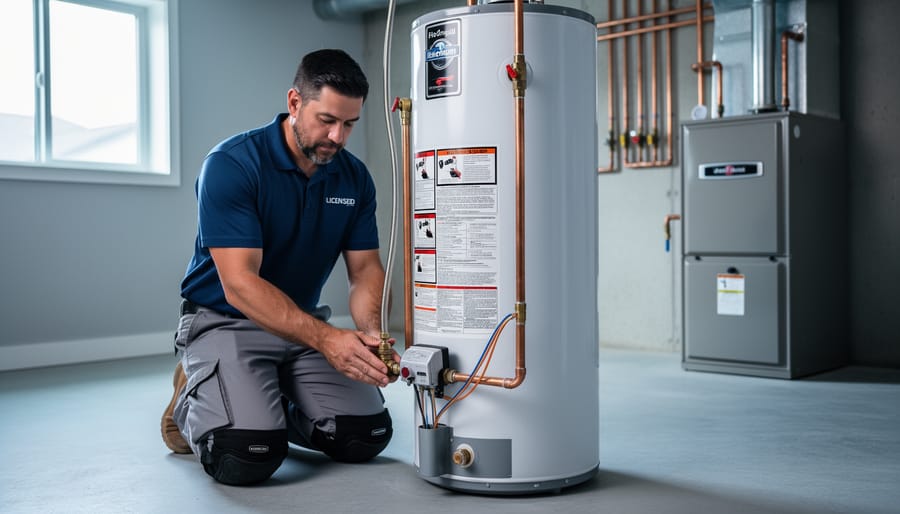
Replacing a water heater in Calgary typically takes 3 to 6 hours for a professional installation and costs between $1,800 and $4,500 depending on the type of unit you choose. The process involves shutting off utilities, draining and disconnecting your old tank, installing the new one to current Alberta Building Code standards, and securing the necessary permits from the City of Calgary. Most homeowners hire licensed professionals because gas and electrical connections require certification, and improper installation can void warranties or create safety hazards.
Calgary’s cold climate adds unique considerations to water heater replacement. Your new unit needs adequate capacity to handle winter demand, and if you’re installing a tankless model, it must be rated for incoming water temperatures as low as 2°C. The good news? Today’s high-efficiency models can cut your energy bills by 20 to 40% compared to older tanks, a meaningful saving given our long heating season.
Whether you’re dealing with a leaking tank, rusty water, or a unit that’s simply reached the end of its 10 to 15 year lifespan, understanding the replacement process helps you make informed decisions. Some homeowners we’ve heard from tackled parts of the job themselves, like draining the old tank, while leaving gas line work and final connections to the experts at FlameTech Plumbing & Heating.
This guide walks you through what’s involved in a Calgary water heater replacement, from choosing the right equipment for our climate to knowing which steps require a professional and which you can handle yourself.
When You Need a Water Heater Replacement (Not Just a Repair)
Most Calgary homeowners wonder at some point whether their failing water heater needs a quick fix or a full replacement. The answer isn’t always obvious, but a few telltale signs can help you decide.
Age is the biggest factor. If your water heater is 10-12 years old (8-10 for tankless models), replacement often makes more financial sense than water heater repair. At that age, efficiency has declined, parts are wearing out, and you’re likely facing repeated breakdowns within a year or two anyway.
Here are the warning signs that typically point toward replacement rather than repair:
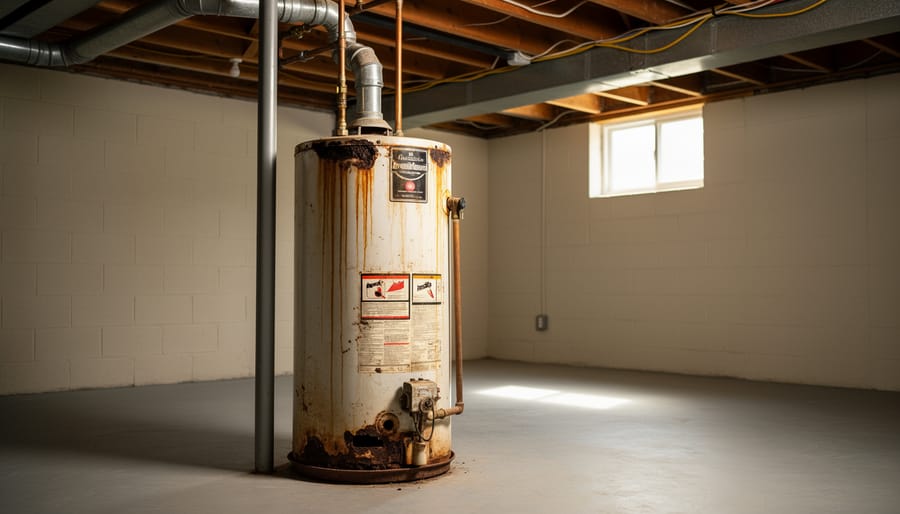
- Rust-colored water or visible corrosion on the tank, which indicates the interior lining has failed
- Pooling water or active leaks around the base of the unit
- Rumbling, popping, or banging noises caused by sediment buildup that can’t be flushed out
- Inconsistent hot water supply or the tank running out much faster than it used to
- Multiple repair calls within 12-18 months, especially if repair costs exceed half the price of a new unit
- A noticeable jump in your gas or electric bills with no other explanation
Once leaking starts, replacement is almost always the only option. Internal tank corrosion can’t be reversed, and patches are temporary at best.
A real Calgary example: Sarah from Bridgeland called a plumber three times in eight months for her 13-year-old water heater. The pilot light kept going out, then the thermostat failed, then she noticed rust spots. Her plumber finally said, “We can keep patching this, but you’re throwing good money after bad.” She replaced it with an energy-efficient model and her monthly gas bill dropped by $18. Sometimes the math just makes the decision for you.
If you’re experiencing two or more of these signs and your unit is over a decade old, start planning for replacement rather than hoping repairs will extend its life.
Understanding Your Calgary Water Heater Options in 2026
Before you pick up a single wrench, you’ll need to choose the right water heater for your home. Calgary’s cold climate narrows your options somewhat, not every model thrives when it’s -30°C outside, but you still have solid choices in 2026.
Conventional tank water heaters remain the most common option in Calgary homes. These store 40 to 80 gallons of heated water in an insulated tank, ready when you need it. They’re affordable upfront (typically $800 to $1,500 for the unit alone), straightforward to install, and reliable in our winters. The downside? They heat and reheat water around the clock, which means higher gas or electricity bills. If you have a large family or multiple bathrooms, you’ll want at least a 50-gallon tank; smaller households can manage with 40 gallons.
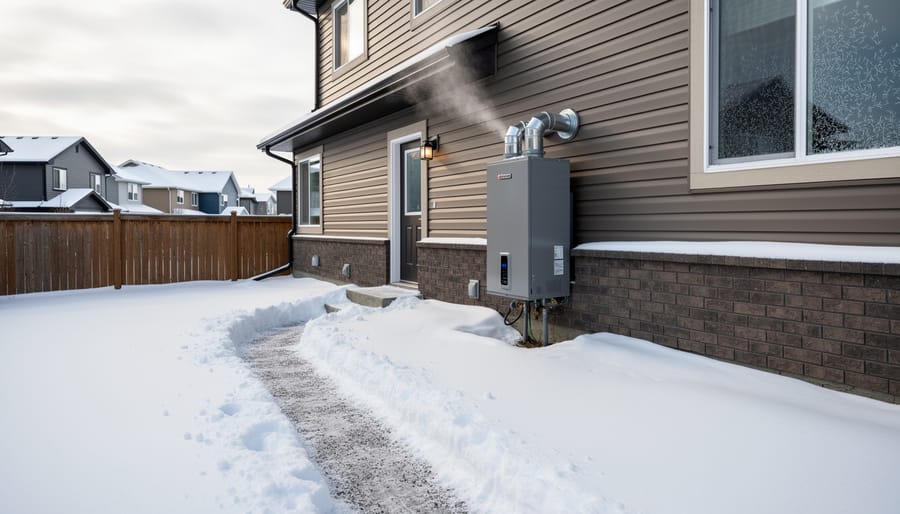
Tankless or on-demand water heaters heat water only when you open the tap. They’re compact, wall-mounted units that can last 20 years or more and cut energy costs by 25 to 35 percent compared to tank models. However, they cost more initially ($1,500 to $3,000), require adequate gas line capacity or significant electrical upgrades, and can struggle when Calgary’s incoming water temperature drops to near-freezing in January. You may need a larger unit or multiple units to serve several fixtures simultaneously.
Heat pump water heaters pull warmth from surrounding air to heat water, making them extremely efficient in moderate climates. In Calgary’s cold basements, though, they work harder and lose some efficiency advantage. They also need considerable space around them for airflow. Consider these only if you have a warm mechanical room or you’re pairing the installation with basement heating improvements.
Condensing water heaters capture exhaust heat that conventional tanks waste, achieving efficiency ratings above 90 percent. They’re excellent for Calgary homes with high hot water demand and natural gas service, though they cost $2,000 to $3,500 and require proper drainage for the condensate they produce.
If you’re also weighing boiler replacement for home heating, think about timing. Some Calgary contractors offer package deals when you replace both systems together, and coordinating the work saves you from two separate permit processes. A condensing water heater pairs especially well with a modern condensing boiler, since both maximize efficiency from your gas supply.
Choose based on your household size, budget, existing utilities, and how long you plan to stay in your home.
Tools, Materials, and Permits You’ll Need
Getting organized before you start makes water heater replacement far less stressful. Whether you’re tackling a tank model or going tankless, you’ll need the right equipment on hand, and you’ll want to understand Calgary’s permit process upfront so there are no surprises mid-project.
Essential Tools
- Pipe wrench and adjustable wrench for loosening and tightening water connections
- Tubing cutter or hacksaw for cutting copper or PEX lines
- Screwdrivers (flathead and Phillips) for mounting brackets and electrical panels
- Level to ensure the new unit sits perfectly flat
- Garden hose for draining the old tank
- Appliance dolly or hand truck for moving the heavy unit
- Voltage tester (for electric models) to confirm power is off
- Propane torch and solder (if working with copper pipes)
- Teflon tape and pipe joint compound for leak-proof connections
Materials You’ll Need
- New water heater sized appropriately for your household
- Expansion tank (required by Calgary code for closed water systems)
- Temperature and pressure relief valve if not included with the unit
- Flexible water supply connectors or copper/PEX piping
- Gas-rated flexible connector for gas models, or electrical cable and breaker for electric units
- Discharge pipe for the relief valve
- Ball valves for shutoff points
- Venting materials if replacing a gas model and existing vent won’t work
Calgary Permits and When You Need a Pro
In Calgary, you need a permit for water heater replacement, whether gas or electric. The City of Calgary requires a building permit application before installation, and the work must pass inspection after completion. For gas water heaters, only licensed gas fitters can legally connect the gas line, this isn’t optional, and doing it yourself violates provincial safety codes and can void your home insurance. Electric installations have more DIY flexibility, but if you’re unsure about working with 240-volt circuits, hire a licensed electrician. Permit fees typically run between seventy and one hundred fifty dollars depending on the scope, and inspection scheduling happens once installation is complete.
Critical Safety Warnings Before You Begin
Before you start disconnecting anything, let’s talk about what can go seriously wrong and how to keep yourself safe. Water heater replacement isn’t the most dangerous home project, but it combines pressurized water, gas or high-voltage electricity, and scalding temperatures, enough to cause real harm if you’re not careful.
If you have a gas water heater, the gas supply line deserves your complete respect. Natural gas leaks are both explosive and toxic. Before touching any gas connections, shut off the gas supply at the dedicated shutoff valve on the line leading to your water heater. If you smell gas at any point, don’t flip light switches or create sparks, open windows, evacuate everyone, and call your utility company immediately from outside.
Working with a gas water heater also means dealing with combustion byproducts. Improper venting sends carbon monoxide into your home, an odorless killer that you won’t detect until symptoms appear. Gas models must vent to the outside, and those vent pipes need to be properly sized, sloped, and sealed. Don’t reuse old, corroded vent pipes or compromise the draft hood.
Electric water heaters carry their own risks. You’re dealing with 240 volts, enough to stop your heart. Always shut off the breaker, not just the disconnect switch, and verify power is off with a non-contact voltage tester before touching any wires.
The water inside your old heater can exceed 60°C, hot enough to cause third-degree burns in seconds. Let the tank cool for several hours after shutting off the heat source, or drain it slowly with extreme caution. Wear gloves and eye protection when disconnecting supply lines, since trapped pressure can spray scalding water.
Finally, a full 40-gallon tank weighs over 150 kilograms. Moving it alone risks serious back injury or crushing hazards if it tips. Recruit help, use proper lifting technique, and clear a safe path before you start. Water damage is also a concern, have towels, a wet-dry vacuum, and a plan ready for spills, because even careful draining leaves residual water in the tank and lines.
Step-by-Step Water Heater Replacement Process
Draining and Removing Your Old Water Heater
Start by turning off the power or gas supply to your water heater. For electric models, flip the dedicated breaker in your electrical panel. For gas units, rotate the shutoff valve on the gas line to the closed position, usually a quarter turn so the handle sits perpendicular to the pipe. Next, close the cold water supply valve at the top of the tank.
Attach a standard garden hose to the drain valve near the bottom of the tank. Run the other end to a floor drain, sump pit, or outside where the water can safely discharge. Open the drain valve and a hot water tap elsewhere in your home to let air into the system, which speeds up drainage. Expect this to take 20 to 45 minutes depending on tank size and sediment buildup.
If sediment has clogged the drain valve, common in older Calgary units with hard water, open and close the valve a few times to break up deposits, or use a wet-dry vacuum to suction water from the top once you’ve disconnected a supply line. Once empty, disconnect the cold water inlet, hot water outlet, and pressure relief valve discharge pipe. For gas heaters, carefully disconnect the gas line union using two wrenches to prevent twisting the pipe.
Calgary allows old water heaters at most landfills for a small fee, or you can arrange curbside pickup through the city’s bulky item program. Some retailers offer free removal when delivering your new unit.
Preparing the Installation Space
Clear away any debris, old insulation, or sediment residue left by your previous water heater. A clean workspace helps you spot potential issues and work safely. Sweep or vacuum the floor thoroughly, you want a solid view of what you’re dealing with.
Now inspect the floor itself. Set a carpenter’s level on the surface where the new tank will sit. Calgary building codes require your water heater to rest on a level, stable base. If you’re in a basement with a concrete slab, check for cracks or signs of moisture. Wooden platforms in older homes sometimes rot or sag; press down firmly to test stability. A sagging floor can stress connections and cause you to check for leaks repeatedly down the road.
Position your new unit with clearances in mind. Calgary codes typically mandate 6 inches from combustible walls for gas models and enough space around the unit for maintenance access, usually 2 feet in front and 6 inches on the sides. Closet installations demand tighter attention to ventilation and clearance. Garage installs often require an 18-inch elevation above the floor to protect the pilot light from gasoline vapors. Basement setups usually offer more flexibility, but verify venting paths remain unobstructed and compliant.
Connecting Water, Gas, and Electrical Lines
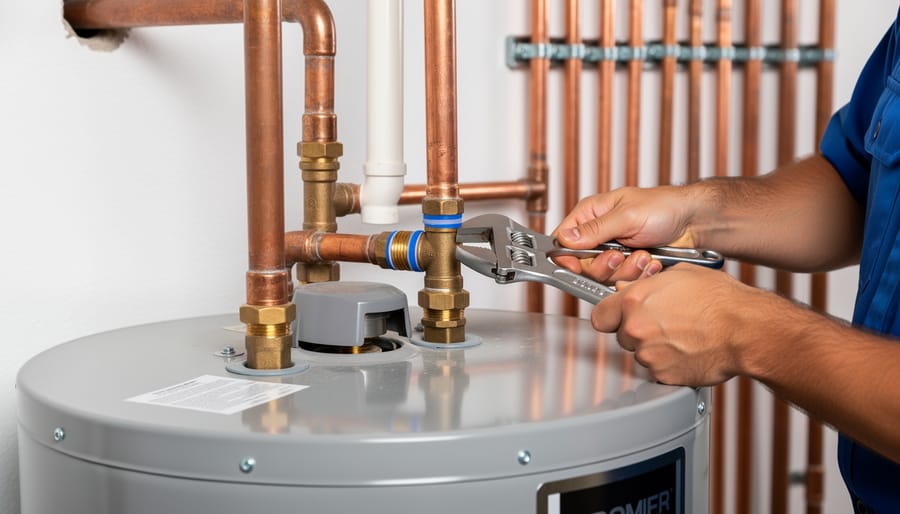
Start by connecting the cold water inlet at the top of the tank. Use two pipe wrenches to tighten the connection, one to hold the inlet fitting steady and another to turn the supply line. Apply thread-sealing tape or pipe dope to male threads before connecting. If you have hard water issues, consider installing an inline filter or decide to choose a water softener to protect your new investment.
Next, attach the hot water outlet line using the same two-wrench technique. Install the temperature and pressure relief valve in its designated opening on the tank, ensuring the discharge pipe runs downward to within six inches of the floor and never angles upward. Connect your expansion tank to the cold water supply line before it enters the heater, using a properly rated tee fitting.
For gas connections, apply approved yellow thread-sealing tape (not white tape) to all male threads. Connect the gas supply line to the control valve, then install a drip leg below the connection point to catch moisture and debris. Install a dedicated gas shutoff valve within six feet of the heater. Never use compression fittings on gas lines.
For electric models, follow the manufacturer’s wiring diagram exactly. Connect ground wire first, then match hot wires to their designated terminals. Use wire nuts rated for the amperage and secure the cable with an appropriate strain relief connector. Verify all connections are tight before restoring power.
Filling, Testing, and Initial Startup
With your connections secure, it’s time to bring your new water heater to life. Start by fully opening the cold water supply valve and listening for water rushing into the tank. Head to the nearest hot water faucet in your home, open it and let it run until you see a steady, consistent stream without sputtering. This purges air from the lines and confirms the tank is full. Watch carefully around all your new connections during this process; any drips now are easier to fix than leaks you discover later.
For gas models, turn the gas supply valve to “on” and follow your manufacturer’s pilot lighting procedure, typically holding the pilot button, clicking the igniter, then waiting 30 seconds before releasing. Set the temperature dial to 120°F, which prevents scalding while delivering comfortable hot water. Electric models are simpler: restore power at the breaker and set the thermostat using a screwdriver through the access panel.
If the pilot won’t stay lit, you might have air in the gas line, wait a few minutes and try again. No hot water after an hour? Double-check that you restored power or gas and verify the thermostat setting. Calgary’s hard water means sediment can affect new installations too, so don’t panic if performance seems slightly off initially.
Verifying Your Installation and What Comes Next
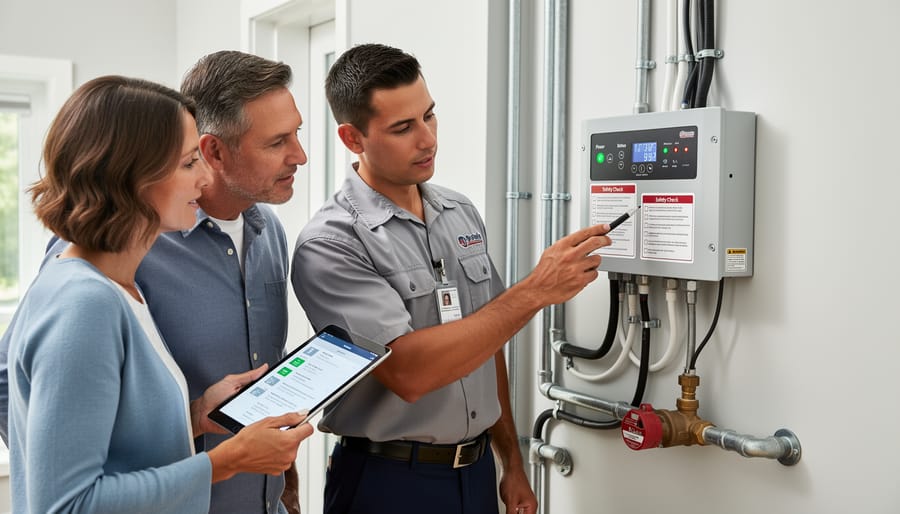
Once you’ve completed the installation steps, resist the urge to walk away. The next 48 hours are critical for catching issues before they become expensive disasters. Start your verification immediately while everything is fresh in your mind.
Begin with a thorough leak check at every single connection point you touched. Run your hand along the cold water inlet, hot water outlet, pressure relief valve, drain valve, and any unions or fittings. Even a tiny bead of moisture matters, what seems minor now can turn into a flood later. Check underneath the tank too, since leaks sometimes run down pipes before dripping. For gas models, create a soapy water solution and brush it onto all gas connections; bubbles indicate a dangerous leak that requires immediate professional attention.
Next, verify your water temperature. Let the heater run for at least an hour, then test hot water at multiple taps throughout your home. The water should reach your set temperature (typically 120°F/49°C) consistently without scalding spikes or lukewarm disappointments. Use a thermometer at the farthest tap from the heater for the most accurate reading.
The pressure relief valve test is non-negotiable. Lift the lever partially and let it snap back, you should see a burst of water discharge through the overflow pipe. This confirms the critical safety mechanism works. If nothing happens or water continues dripping after you release the lever, you need a replacement valve immediately.
For gas water heaters, inspect the venting system carefully. Check that all vent pipes are properly connected, slope upward toward the exterior, and show no gaps or separation. Feel around the draft hood for backdrafting, warm exhaust air shouldn’t be entering your home. Look at the flame through the viewing window: it should burn blue and steady, not yellow or flickering, which suggests incomplete combustion and potential carbon monoxide issues.
Calgary requires a building permit and inspection for water heater replacement, and this isn’t just bureaucracy, it’s protection for you and future homeowners. Schedule your inspection within 24-48 hours of completing the installation. Call 311 or book online through the City of Calgary website. Inspectors will verify proper venting and combustion air supply (gas models), correct temperature and pressure relief valve installation, adequate clearances from combustible materials, proper electrical connections (electric models), and expansion tank installation where required. They’re checking for safety and code compliance, which is exactly what plumbers do on professional installations. Don’t skip this step even if your installation looks perfect, an inspection sticker protects your home’s resale value and ensures your homeowner’s insurance remains valid.
During the first 48 hours, pay attention to how your water heater behaves. Listen for unusual sounds like rumbling, popping, or hissing that might indicate sediment issues or improper installation. Monitor the area around the unit for any moisture, unusual odors (especially a rotten egg smell from gas models), or temperature changes in the surrounding space. Check that the pilot light stays lit and the burner cycles on and off normally as hot water is used and replenished. For electric models, verify the breaker doesn’t trip during heating cycles.
Keep a log of your observations, it sounds tedious, but documenting the first two days helps you spot patterns and provides valuable information if you need to troubleshoot or call for help. Note when the heater cycles, how long it takes to recover after heavy use, and any irregularities you notice. This baseline understanding of your new water heater’s normal operation will serve you well for years to come.
Common Questions About Calgary Water Heater Replacement
What does water heater replacement typically cost in Calgary?
A straightforward tank replacement usually runs between $1,200 and $2,500 including the unit and professional installation, while tankless systems range from $2,500 to $5,000 depending on capacity and complexity. Gas conversions or locations requiring significant venting modifications will increase costs.
Should I replace my water heater myself or hire a professional?
If you’re replacing an electric tank with an identical electric tank and feel comfortable with basic plumbing, DIY is feasible. Gas installations, electrical panel work, permit compliance, and any system changes require a licensed professional in Calgary for both safety and legal reasons.
How long does a typical water heater installation take?
Most straightforward replacements take three to five hours for a professional, or a full day if you’re tackling it yourself. Factor in additional time if you need to obtain permits, address code violations in your existing setup, or coordinate inspections.
Are there energy rebates available for water heater upgrades in Alberta?
Several programs exist through Enmax, ATCO, and federal initiatives for high-efficiency models, though availability changes frequently. Check current offerings before purchasing, as rebates can offset $300 to $1,000 of your upgrade cost for qualifying equipment.
Beyond these basics, warranty coverage deserves attention. Most tank water heaters carry six to twelve-year warranties on the tank itself, with shorter coverage on components like thermostats and heating elements. Keep your receipt and register the unit promptly, since warranty service often depends on proper installation and documented maintenance. If a professional installs your system, their workmanship warranty typically covers installation issues for one to two years.
Winter considerations matter in Calgary’s climate. If you’re replacing a water heater in an unheated garage or crawl space, insulating hot water pipes prevents freezing and reduces standby heat loss. Drain-down capability becomes important if you leave your home vacant during cold snaps, though most modern systems handle brief temperature drops without issue.
When it comes to coordinating with boiler work, many Calgary homeowners tackle both projects together since they share similar permit requirements and trade professionals. If you’re considering boiler replacement for your heating system, scheduling water heater installation simultaneously saves on contractor visits and lets you plan a comprehensive approach to your home’s hot water and heating needs. The systems don’t typically share components, but addressing both at once makes sense from a logistics and efficiency standpoint, especially if you’re upgrading to high-efficiency equipment across the board.
Replacing your water heater isn’t as daunting as it might seem at first. With the right tools, careful attention to safety, and a methodical approach to each step, many Calgary homeowners successfully tackle this project themselves. If you decide professional help is the better route for your situation, you now understand exactly what the process involves and can have informed conversations with contractors about your specific needs.
Your water heater is just one piece of your home’s comfort puzzle. Whether you’re also considering boiler replacement, upgrading your furnace, or thinking about integrated heating solutions, these systems work together to keep your Calgary home comfortable year-round.
We’d love to hear about your experience. Did you replace your water heater yourself? Hire a professional who went above and beyond? Run into unexpected challenges? Share your story with our community, your insights help other homeowners navigate their own projects with confidence.