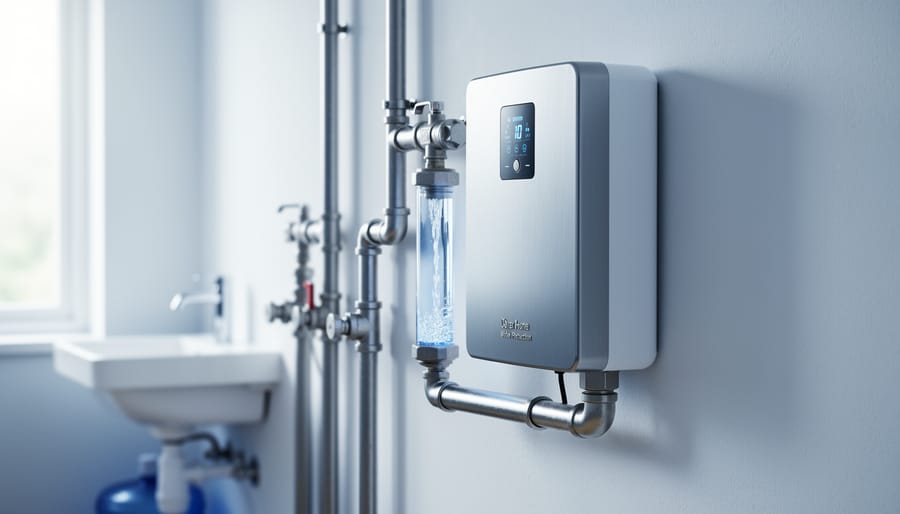
Salt-free water softeners don’t actually soften water. Instead, they condition it by preventing mineral buildup without removing calcium and magnesium, which means you’ll still see soap scum and spots but won’t deal with scale clogging your pipes or water heater. For most homeowners facing hard water, this tradeoff works beautifully: you get protection for your plumbing and appliances without the ongoing salt purchases, wastewater discharge, or sodium added to your drinking supply.
The confusion around these systems makes sense. The industry calls them “salt-free softeners,” but the more accurate term is “water conditioner” or “descaler.” What they do is transform hard minerals into microscopic crystals that won’t stick to surfaces. Your water still contains those minerals, so you won’t get that slippery-soft feel in the shower or spot-free glassware that traditional ion-exchange systems deliver.
But here’s where salt-free systems shine: no electricity needed, no drain connection required, and zero maintenance beyond an occasional media change every few years. You’ll find models like the SpringWell FS1 ($1,452) handling whole-home flow rates without any backwashing cycles or salt refills. The Kind E-2000 ($1,168) brings NSF-certified scale control with a lifetime warranty, while the Aquasana EQ ($829) offers a budget-friendly entry point for smaller homes with moderate hardness levels.
The growth in these systems reflects real changes in how people think about water treatment. Municipal salt discharge limits have pushed homeowners toward alternatives. Environmental concerns matter. And plenty of folks simply don’t want to haul 40-pound salt bags or deal with the slick residue that softened water leaves behind.
Understanding what these systems actually do, and what they don’t, helps you make the right choice for your home’s specific needs and your family’s expectations.
What Makes Salt-Free Systems Different
The Conditioning Process Explained
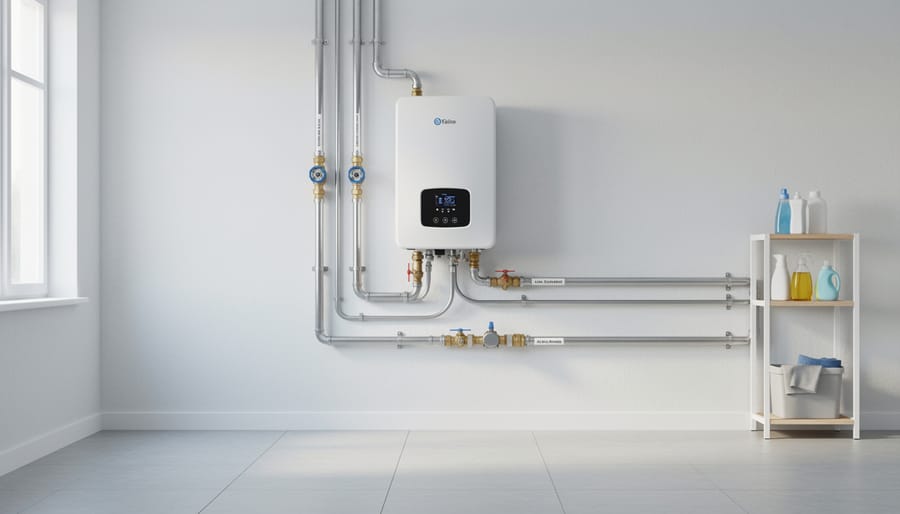
When water flows through a TAC conditioner, hardness minerals like calcium and magnesium encounter a specially treated media surface covered in microscopic template structures. These templates act as nucleation sites where the dissolved minerals crystallize instantly into tiny, stable crystals roughly the size of a few microns.
Here’s what makes this process different from traditional softening: the minerals don’t get removed from your water. Instead, they change form. Those microscopic crystals stay suspended in the water as it flows through your pipes, but they’ve lost their ability to bond together and form the crusty, stubborn scale you’ve probably scrubbed off your showerhead or the inside of your coffee maker.
The crystals stay in suspension because they’re neutrally charged and incredibly small. They flow right through your plumbing system and down the drain without clinging to pipe walls, water heater elements, or appliance surfaces. This is why TAC systems can prevent new scale buildup even though they’re not technically softening your water by removing minerals.
For scale control, this matters because the majority of household plumbing problems related to hard water stem from mineral accumulation, not the minerals themselves. Your pipes stay clear, your water heater runs efficiently, and your fixtures avoid that white film buildup. The transformation happens continuously as water flows through the system, so there’s no regeneration cycle needed like with salt-based softeners.
What You Keep (And What You Don’t)
Here’s what happens inside a salt-free conditioner: calcium and magnesium don’t vanish. They stay in your water, but TAC technology converts them into tiny crystal structures that can’t grab onto surfaces. Think of it like this, you still have the same minerals, just in a form that won’t build up in your pipes or leave that chalky film on your faucets.
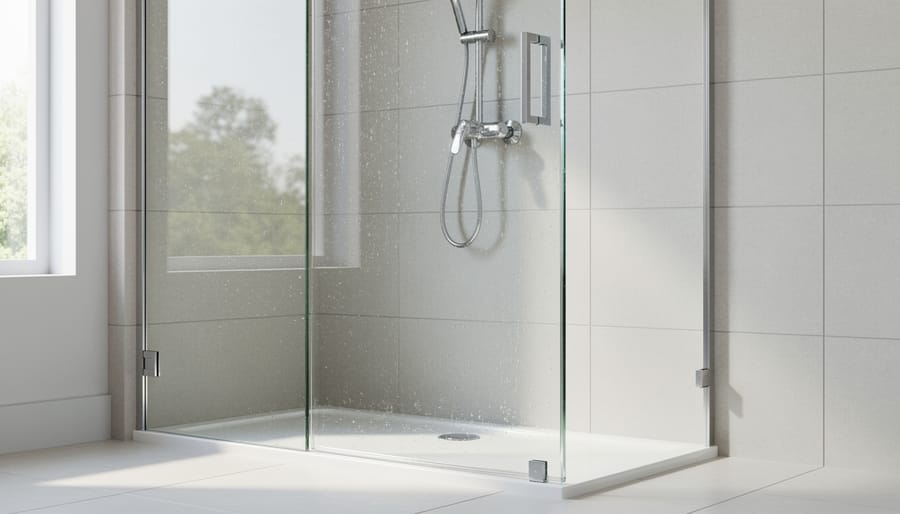
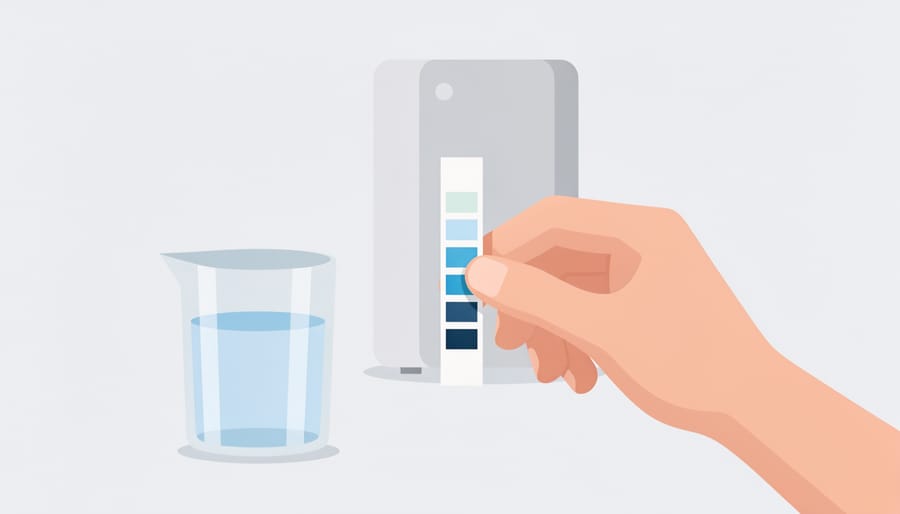
This trips up a lot of homeowners. If you test your water after installing a salt-free system, it’ll still show the same hardness level. That’s normal. The minerals are there, but they’re neutralized for practical purposes. You won’t get slippery, salt-softened water that makes soap hard to rinse off. You also won’t see soap lather quite as much as you would with a traditional softener, since the minerals remain present.
What you keep: the mineral content your body can use, lower water bills without backwash waste, and no monthly salt purchases. What you don’t keep: scale buildup on heating elements, crusty deposits around fixtures, and the maintenance hassle of refilling salt tanks.
Comparing Salt-Free Water Conditioner Types
TAC (Template Assisted Crystallization) Systems
TAC systems are the workhorses of salt-free conditioning, and they’re what you’ll find in most reputable whole-home units. Instead of removing minerals, TAC media triggers a chemical reaction that converts calcium and magnesium into tiny crystals before the water reaches your pipes. Those crystals flow right through your plumbing without sticking to anything.
The typical TAC system can handle anywhere from 10 to 15 GPM, which covers most household needs comfortably. A three-bathroom home running multiple fixtures at once won’t overwhelm a properly sized unit. That flow capacity is why TAC systems work so well for city water applications, where pressure is consistent and you need reliable performance across all your fixtures simultaneously.
Maintenance is refreshingly simple. The TAC media lasts about three to seven years depending on your water hardness and daily usage. When it’s spent, you replace the media tank, no salt to haul, no brine to drain, and no complicated regeneration cycles to program. Most homeowners find the reduced hassle worth the upfront cost, especially if their municipality restricts or taxes salt discharge.
Electromagnetic and Magnetic Descalers
Electromagnetic and magnetic descalers wrap around your existing pipes without cutting into your plumbing. They use magnetic fields or electronic pulses to alter the behavior of hardness minerals as water flows through, theoretically preventing them from forming scale. You’ll find these units priced well below TAC systems, often under $200, which makes them appealing for homeowners testing the salt-free concept.
Here’s the challenge: results vary significantly based on your specific water chemistry. Some homeowners report noticeable reduction in scale buildup, while others see minimal effect. Water hardness level, pH, flow rate, and even pipe material all influence how well these devices perform. Unlike TAC conditioners, electromagnetic descalers lack widespread third-party certification for scale control effectiveness, so you’re taking more of a gamble.
If you have moderately hard water and want to experiment with the most affordable salt-free option, these can be worth trying. Just keep your expectations realistic and verify the return policy before purchasing. For harder water or homes needing proven performance, the certified TAC systems discussed elsewhere in this guide offer more reliable results.
Catalytic Media Conditioners
Catalytic media conditioners use specialized granular media that alters the structure of hardness minerals as water flows through a tank, similar in size and appearance to traditional softener tanks but without salt or regeneration cycles. The media works through a catalytic process that converts dissolved calcium and magnesium into microscopic crystal particles that resist adhering to surfaces.
Compared to TAC systems, catalytic media conditioners typically need periodic media replacement every three to five years, while TAC cartridges often last longer before requiring replacement. Both technologies condition rather than remove minerals, but catalytic systems generally handle a broader range of water chemistries and can work with higher hardness levels than some TAC units. The trade-off is that catalytic systems require more installation space due to their tank design, whereas TAC conditioners like the compact Kind E-2000 fit in tighter locations.
Maintenance involves occasional backwashing to keep the media bed clean, though this doesn’t require salt or chemicals. If you’ve got the space and want a system that handles variable water conditions well, catalytic media offers a middle ground between traditional softeners and compact TAC units.
Key Factors When Choosing Your System
Flow Rate and Household Size
Choosing a system that can’t keep up with your household’s water demand defeats the purpose of any conditioning system. The key measurement is GPM (gallons per minute), your system needs to handle peak usage when multiple fixtures run simultaneously.
Start by counting your bathrooms. A typical home uses about 5-7 GPM per bathroom during peak morning hours when showers, toilets, and sinks compete for water. A three-bathroom house running two showers plus a dishwasher might hit 12-15 GPM at once. The Kind E-2000’s 15 GPM capacity would handle that load, but a smaller system might bottleneck the flow.
Here’s a quick calculation method: add up simultaneous fixture use. If two people shower (5 GPM each) while the washing machine fills (3 GPM), you need at least 13 GPM capacity. Build in a buffer, undersized systems create pressure drops that leave you with weak showers and annoyed family members.
Don’t assume bigger is always better, though. Oversized systems for small households waste money upfront. A couple in a two-bathroom condo doesn’t need the same capacity as a family of five. Our water softener buying guide covers flow calculations in more depth, but matching GPM to actual usage patterns keeps your system efficient and your water pressure strong.
Certifications and Testing Standards
When you’re investing over a thousand dollars in a water conditioner, you want proof it actually works. That’s where third-party certifications come in. NSF certification specifically tests whether a system can prevent scale buildup under real-world conditions, not just in a manufacturer’s lab.
The Kind E-2000, for example, carries NSF-certified scale control, meaning it has passed independent testing that verifies its claims. This certification matters because it’s one thing for a company to say their system stops scale, and another to have a neutral testing organization confirm it.
Look for systems certified to NSF/ANSI Standard 61 at minimum, which confirms the materials are safe for drinking water contact. Better still is NSF/ANSI Standard 140, which specifically covers the scale inhibition claims that salt-free systems make.
Not every system will have these certifications, and that doesn’t automatically mean they don’t work. But when you’re comparing options, a certified system gives you documented evidence rather than just marketing promises. It’s the difference between trusting what a company says and having independent verification.
Installation and Space Requirements
One of the biggest advantages of salt-free conditioners is their simple installation footprint. Unlike traditional softeners, these systems don’t need a drain line for backwash or a nearby electrical outlet. Most units mount directly to your main water line with standard compression fittings, making them ideal for tight spaces like utility closets or crawl spaces where a bulky brine tank wouldn’t fit.
The compact sizing varies by model, but most whole-home units occupy about the same space as a standard whole house water filter setup. The Aquasana EQ and Kind E-2000 are particularly space-efficient options for smaller homes or condos.
Can you install one yourself? If you’re comfortable with basic plumbing and can shut off your main water supply, many homeowners successfully complete the installation in two to three hours. You’ll need standard pipe wrenches, Teflon tape, and possibly compression fittings. That said, if cutting into copper or PEX lines makes you nervous, or if your home has unusual plumbing configurations, calling a licensed plumber ensures proper flow direction and positioning. Most manufacturers provide detailed instructions, and some warranties require professional installation to remain valid, so check those terms before deciding.
Warranty and Long-Term Costs
A lifetime warranty sounds great, but read the fine print. The Kind E-2000’s lifetime coverage typically protects the tank and key components, not consumable prefilter cartridges or media that naturally depletes. Many homeowners focus only on the sticker price and miss ongoing costs like filter replacements, which can run $50-$100 annually depending on the system.
Calculate your total cost over five to ten years, not just what you pay upfront. A system priced at $829 might need more frequent media changes than one at $1,168, potentially costing you more in the long run. Limited warranties often cover three to five years on parts, leaving you exposed if something fails afterward. Compare what’s actually protected and for how long, not just the marketing language. The cheapest option today isn’t always the smartest investment for your wallet tomorrow.
Top Salt-Free Water Conditioner Options for 2026
Best for City Water Homes: SpringWell FS1
The SpringWell FS1 stands out for homeowners on municipal water who want reliable, whole-house protection without the hassle of traditional softeners. Its TAC technology works particularly well with treated city water, where hardness levels are typically consistent and moderate. At $1,452, you’re investing in a system that handles the demands of a busy household without adding salt or creating wastewater.
What makes the FS1 practical for city water applications is its strong flow capacity. You won’t notice pressure drops when multiple fixtures run simultaneously, showers, dishwasher, and washing machine can all operate at once without performance issues. The no-drain-line design matters more than you might think. Since you’re not flushing anything to a drain, installation becomes simpler and you avoid potential plumbing complications down the road.
The long-term scale control is where this system earns its keep. Pipes and water heaters stay cleaner over years of use, which translates to fewer repair calls and longer appliance life. If you’re comparing options across categories, consider how the FS1 fits alongside other best water purification systems for comprehensive water treatment. For city water homes dealing with moderate to high hardness, the FS1 offers a solid middle ground between upfront cost and maintenance-free operation.
Best Certified Performance: Kind E-2000
The Kind E-2000 strikes a smart balance for homeowners who want proof their system actually works. This mid-priced option is NSF-certified for scale control, meaning it has been independently tested and verified to prevent mineral buildup rather than just relying on manufacturer claims. That certification matters when you are investing over a thousand dollars in a system.
At $1,168, the Kind E-2000 sits between budget and premium options, but it delivers features you would expect from pricier models. The compact design fits into tighter spaces without sacrificing performance. The built-in prefilter handles sediment before water reaches the conditioning media, which extends the system’s effectiveness and reduces maintenance headaches down the road.
Flow capacity is where this system really shines for medium-sized homes. The 15 GPM rating means you can run multiple showers, flush toilets, and wash dishes simultaneously without experiencing a drop in water pressure. That makes it suitable for three to four bathroom homes where everyone is getting ready at the same time.
The lifetime warranty adds long-term value that offsets the initial cost. You are not just buying the hardware but also peace of mind that the manufacturer stands behind their product for as long as you own your home. This system makes the most sense for homeowners who want verified performance, need solid flow capacity, and value warranty protection over the absolute lowest price.
Best for Smaller Homes: Aquasana EQ
The Aquasana EQ makes sense if you’re working with a smaller home and don’t want to spend a fortune getting started with salt-free conditioning. At $829, it’s the most budget-friendly option among the systems we’ve looked at, which matters when you’re testing the waters with this technology for the first time.
This system handles moderate hardness levels without issue, but it’s designed for homes with fewer bathrooms and lower simultaneous water usage. Think one to two bathrooms rather than a sprawling four-bedroom setup. The flow rate is calibrated for smaller households, so if you regularly have multiple showers running while the dishwasher’s going and someone’s doing laundry, you’ll likely notice pressure drops.
What makes the Aquasana EQ appealing beyond price is how straightforward the upkeep is. You’re not dealing with complicated media replacements or frequent cartridge changes. The compact design fits in tighter spaces like apartment-sized mechanical rooms or small utility closets, which is a real advantage if you’re not blessed with a spacious basement.
The catch is knowing your limits. If your water hardness is severe or you’ve got a busy household with high flow demands, you’ll outgrow this system quickly. It’s genuinely best for couples, small families, or anyone in a condo or townhome who wants scale protection without the commitment of a larger, pricier setup. Just be honest about your household’s water usage before you buy.
Common Mistakes to Avoid When Buying
Choosing a salt-free water conditioner can feel overwhelming when you’re comparing systems and trying to make sense of the claims. The good news is that most purchasing mistakes are easy to avoid once you know what to watch for. Let me walk you through the most common missteps homeowners make so you can skip the frustration and get it right the first time.
The biggest mistake is expecting your water to feel exactly like it does with a traditional salt-based softener. You won’t get that slippery, ultra-soft feeling or the thick soap lather that comes from ion exchange systems. Salt-free conditioners keep the minerals in your water while changing their form to prevent scale buildup. If you absolutely need softer-feeling water for skin sensitivity or you want that classic “soft water” shower experience, a salt-free system won’t deliver that result. Know what you’re getting: excellent scale prevention without the actual softening effect.
Here are the top five mistakes that trip up buyers:
- Expecting soap lather and slippery water like traditional softeners provide
- Buying a system with too low a flow rate for your household size and simultaneous water use
- Skipping NSF or third-party certifications when evaluating scale control claims
- Overlooking the need for pre-filters when using well water with sediment or iron
- Assuming all salt-free systems can handle very hard water above 75 grains per gallon
Flow rate miscalculation causes real problems down the line. A compact system like the Aquasana EQ works great for smaller homes, but if you have four bathrooms and multiple people showering simultaneously, you’ll quickly overwhelm a system designed for lighter use. Calculate your peak demand honestly. Count your fixtures, consider how many might run at once during busy morning routines, and match that to the system’s rated GPM. The Kind E-2000’s 15 GPM handles most average homes comfortably, while the SpringWell FS1 manages even higher flow needs for larger households.
Don’t skip the certification check just because a system costs less. Any manufacturer can claim their product prevents scale, but NSF certification means independent testing verified those claims. The Kind E-2000 carries NSF-certified scale control, which gives you concrete proof the technology works as advertised. Systems without third-party validation might perform fine, but you’re taking the manufacturer’s word without outside confirmation.
Installation requirements catch people off guard more often than you’d think. Most salt-free systems need less space than traditional softeners and don’t require drain lines, but you still need adequate room for the tank, accessible plumbing connections, and sometimes electrical outlets for electromagnetic models. Measure your installation space before you buy, and be realistic about whether you can handle the installation yourself or need to budget for a plumber. The reassuring part is that these systems are generally simpler to install than salt-based units, but forgetting to account for your specific setup can delay your whole project.
Salt-Free Systems in Real-World Applications
Commercial and Specialty Facility Considerations
Salt-free water conditioners are gaining traction in commercial settings where environmental regulations or operational priorities make salt discharge problematic. Food service facilities, craft breweries, and eco-certified hotels often face restrictions on sodium levels in wastewater, making TAC-based systems an attractive alternative for scale control without the regulatory headaches.
Medical and laboratory facilities represent another specialized application. These environments need consistent water quality without the sodium ions that traditional softeners introduce, particularly when water flows into sensitive equipment or processes. Salt-free systems maintain mineral balance while preventing scale buildup in autoclaves, washing equipment, and cooling systems.
Agricultural operations with private wells face unique challenges that combine well water filtration needs with scale control requirements. Greenhouse operations, dairy farms, and irrigation systems can benefit from conditioners that prevent mineral deposits without adding salt to already-complex water chemistry. The key consideration for these facilities is matching system capacity to high-volume demands while ensuring compatibility with existing filtration equipment.
What Plumbers Should Know
Installing salt-free conditioners differs from what plumbers do with traditional softeners. These systems require no drain connection or electrical hookup, simplifying installation, but proper upstream filtration matters. Check manufacturer specs for required sediment prefilters, and verify incoming water pressure stays within the 25-80 PSI range most units need.
Client education prevents callback headaches. Explain upfront that these systems condition minerals rather than remove them, so water won’t feel slippery like traditional softened water. Homeowners expect that sensation and may think the system failed without this context. Clarify that existing scale takes months to gradually reduce.
For warranty protection, document pre-installation water testing results. Many manufacturers void coverage if hardness exceeds rated levels or if well water contains iron without proper pretreatment. The Kind E-2000’s lifetime warranty, for example, requires proof of appropriate water chemistry. Keep installation photos showing proper orientation and clearances, since warranty claims often hinge on correct setup.
Frequently Asked Questions
Do salt-free water conditioners actually work? It’s the most common question homeowners ask, and the honest answer is yes, but with important caveats. These systems prevent new scale from forming by crystallizing hardness minerals before they can stick to pipes and appliances. However, they don’t remove the minerals from your water or make it feel slippery like soap, which is what traditional softeners do. If you’re expecting that classic soft water feel, you’ll be disappointed. What you will get is real protection against scale buildup without salt or wastewater.
How long the media lasts depends on which type of system you choose. TAC media in systems like the SpringWell FS1 typically lasts 6 to 8 years before needing replacement, while catalytic media might need changing every 3 to 5 years. The Kind E-2000’s built-in prefilter extends media life by catching sediment before it reaches the conditioning media, which is why the lifetime warranty coverage makes sense for that system. Factor replacement costs into your long-term budget when comparing models.
Will a salt-free system remove existing scale buildup?
No, these systems prevent new scale from forming but won’t dissolve deposits that already exist in your pipes. You might see gradual loosening of old buildup over several months as conditioned water flows through, but don’t count on it as a descaling solution.
Can I use a salt-free conditioner with well water?
It depends on your water chemistry. Well water with high iron, manganese, or sediment needs pretreatment first, and extremely high hardness levels (over 75 GPM) may overwhelm some systems. Test your water and check manufacturer specs before buying.
Are salt-free systems cheaper than traditional softeners over time?
Usually, yes. With no salt to buy (saving $100 to $200 per year), no wastewater discharge fees, and less frequent media changes, most homeowners save money after the first few years despite higher upfront costs like the $1,452 for a SpringWell FS1 versus $600 to $800 for a basic salt softener.
Do I need a plumber to install one?
Not necessarily. The no-drain-line design makes DIY installation easier than traditional softeners if you’re comfortable with basic plumbing, but hiring a professional ensures proper sizing and positioning for optimal flow.
Installation complexity varies by model. Compact systems like the Aquasana EQ are easier for DIYers to tackle in tight spaces, while larger whole-home units might require cutting into main lines and ensuring adequate flow. If you’re handy and have a good shutoff valve, you can probably handle it yourself with the right tools. Otherwise, expect to pay $200 to $400 for professional installation, which is still less than the electrical work and drainage setup that traditional softeners require.
You’ve made it through the research, compared the technologies, and sorted through the options. Here’s what matters most: salt-free systems condition your water rather than truly soften it, and that distinction should guide your entire decision. If you need that slippery feel and complete mineral removal, you’ll want a traditional softener. But if you’re focused on scale prevention without salt, wastewater, or constant maintenance, you’re looking at the right technology.
Match your choice to your household’s flow needs first. A two-bathroom home has different demands than a four-bathroom household with teenagers who shower endlessly. Check for NSF certification or credible third-party testing, especially for scale control claims. Consider your water source and hardness level, since well water with high hardness or specific contaminants may need a different approach entirely.
The three systems we covered range from $829 to $1,452, each designed for different situations. You don’t need to overthink this once you’ve matched the specs to your home’s reality.
If you’ve installed a salt-free system or you’re still weighing your options, we’d love to hear from you. Share your experience in the comments or ask questions if something still isn’t clear. Real homeowner insights help everyone make better decisions, and your story might be exactly what someone else needs to read today.