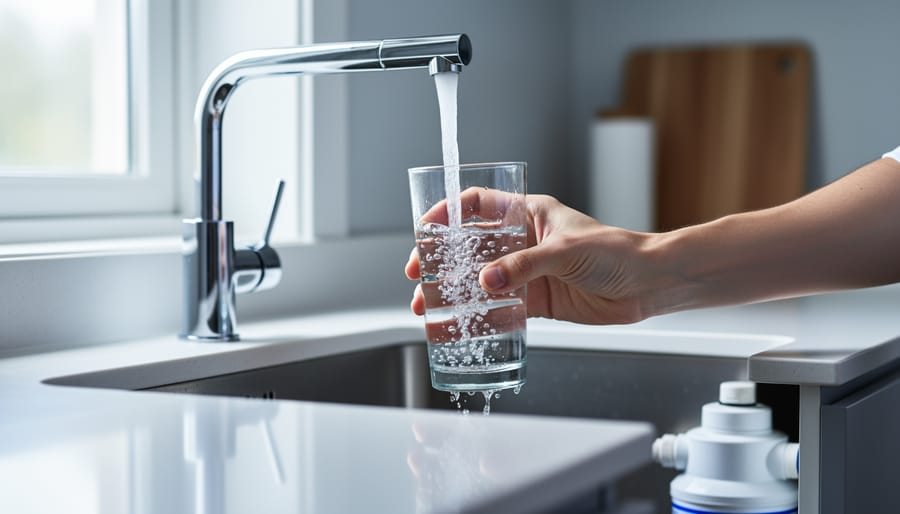
A reverse osmosis system for your home removes up to 99% of dissolved contaminants from your drinking water, including heavy metals, fluoride, chlorine, and microscopic particles that standard filters miss. These systems work by forcing water through an ultra-fine membrane that blocks impurities while allowing pure water molecules to pass through, delivering cleaner water straight from your tap.
If you’ve noticed a strange taste in your water, received a concerning water quality report, or simply want better protection for your family, an RO system might be the solution you need. The technology isn’t new, but what has changed is accessibility. Modern home systems are more affordable, easier to install, and far more efficient than the bulky, wasteful units from years past.
Here’s what makes this decision different from buying a simple pitcher filter: you’re investing in a permanent fixture that integrates into your plumbing. Installation typically takes two to four hours for a standard under-sink model, with costs ranging from around $200 for basic DIY kits to over $1,500 for professionally installed whole-house systems. Maintenance involves changing filters every six to twelve months and replacing the RO membrane every two to three years.
The question isn’t really whether reverse osmosis works. It does, and remarkably well. What you need to figure out is whether the upfront cost, the water waste during filtration, and the ongoing maintenance align with your household’s specific water quality issues and budget. Some homeowners find the investment pays off immediately. Others discover simpler filtration methods work just fine.
What a Reverse Osmosis System Actually Does
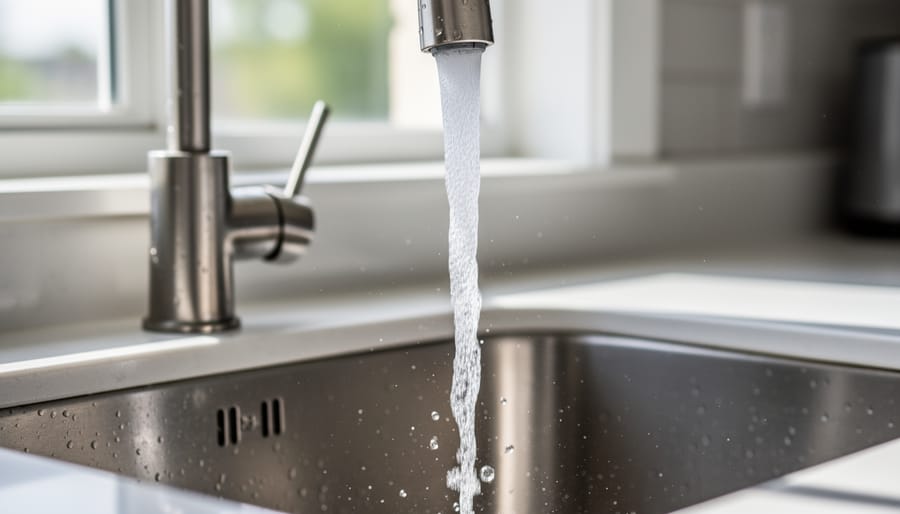
Think of a reverse osmosis system as an incredibly thorough bouncer for your water. While standard filters catch larger particles like sediment and chlorine, RO takes things several steps further by forcing water through a semi-permeable membrane so fine that only water molecules can squeeze through. Everything else, dissolved salts, heavy metals, pesticides, pharmaceuticals, gets left behind and flushed away.
The process happens in stages, typically three to five depending on your system. First, a pre-filter removes larger particles like rust and sediment that could clog the main membrane. Next comes the heart of the system: water is pushed under pressure through that ultra-fine membrane, which has microscopic pores about 0.0001 microns in size. To put that in perspective, most bacteria are around 0.2 microns, so they don’t stand a chance of getting through.
After the membrane does its work, the water typically flows through a post-filter (often activated carbon) to polish the taste and remove any lingering odors. What emerges from your tap is remarkably pure water. RO reduces dissolved ions by 90-99%, meaning it removes things like lead, arsenic, fluoride, nitrates, and sodium that other filtration methods might miss.
One thing that confuses people: RO systems do produce wastewater. For every gallon of purified water, you’ll typically send two to three gallons down the drain as “reject water” that carries away the concentrated contaminants. That sounds wasteful, and we’ll address that concern later, but it’s how the system keeps that membrane clean and your water pure. The key takeaway? RO doesn’t just filter your water, it fundamentally separates the good from the bad at a molecular level.
Signs Your Home Could Benefit from an RO System
You might think your tap water is fine until you really start paying attention. That metallic aftertaste in your morning coffee. The white film on your glassware. The way your skin feels dry after showering. These aren’t just minor annoyances, they’re signs that your water quality could be better.
If your water tastes or smells off, even slightly, you’re noticing dissolved minerals, chlorine, or other contaminants that slip through municipal treatment. Many homeowners discover the problem when guests politely decline tap water or when they realize they’ve been buying bottled water for years without questioning why.
Hard water leaves its calling card everywhere: crusty faucet aerators, soap that won’t lather properly, appliances that die early from mineral buildup. While softeners address hardness, they don’t remove the full range of contaminants an RO system tackles.
Health concerns often trigger the search for better filtration. Families with infants, elderly relatives, or members with compromised immune systems need confidence in their water purity. If you’ve received a boil-water advisory even once, or if local news has reported treatment plant issues, that nagging worry doesn’t just disappear.
Well water users face unique challenges. Municipal testing doesn’t apply to you, and seasonal changes, nearby agriculture, or aging infrastructure can introduce bacteria, nitrates, or heavy metals. Comprehensive well water filtration becomes essential, not optional.
Even in areas with generally good water, localized problems exist. Older homes with lead pipes, neighborhoods downstream from industrial sites, or regions with naturally high mineral content all create situations where what comes out of your tap needs additional treatment before you’d want to drink it.
Types of Home Reverse Osmosis Systems
Under-Sink RO Systems
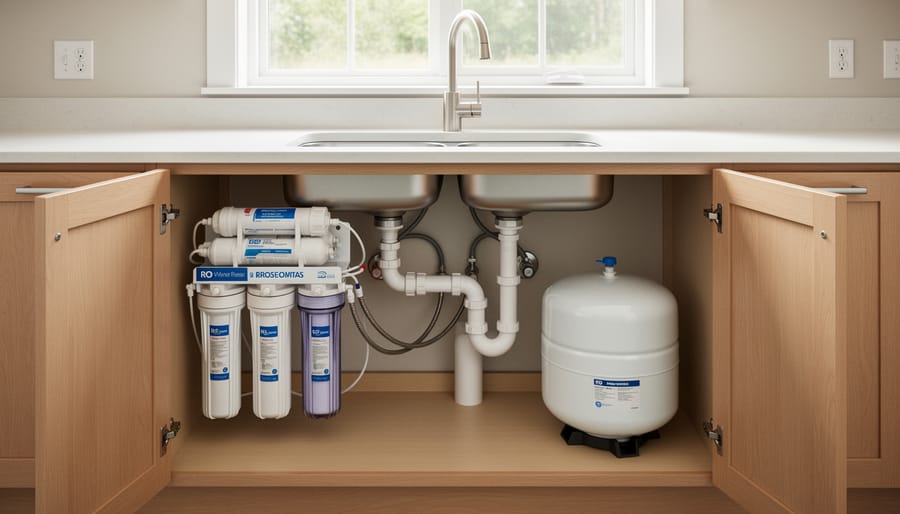
Under-sink RO systems are the go-to choice for most homeowners because they strike that sweet spot between thorough filtration and practical installation. These compact units tuck neatly into the cabinet below your kitchen sink, connecting to your cold water line and adding a dedicated faucet right next to your regular tap. You get point-of-use filtered water for drinking and cooking without the expense or complexity of treating water throughout your entire house. They’re more discreet than countertop models and far easier to install than whole-house systems, which is why they dominate the home purification systems market. Most units handle 50 to 75 gallons per day, plenty for a typical household’s drinking and cooking needs.
Whole-House RO Systems
A whole-house reverse osmosis system treats every drop of water that flows through your pipes, showers, washing machines, dishwashers, and all your faucets get filtered water. It’s the most comprehensive approach, but also the biggest investment you’ll make in home water quality.
These systems install at your main water line, typically in a basement or utility room, and they’re significantly larger than under-sink units. You’re looking at a substantial upfront cost, often several thousand dollars for equipment and professional installation, plus the ongoing expense of replacing filters and membranes for your entire household’s water consumption.
The tradeoff? Every bath your kids take, every load of laundry, even the water filling your coffee maker comes pre-filtered. For homeowners dealing with seriously contaminated well water or those who want complete peace of mind, it’s worth considering.
Countertop and Portable Options
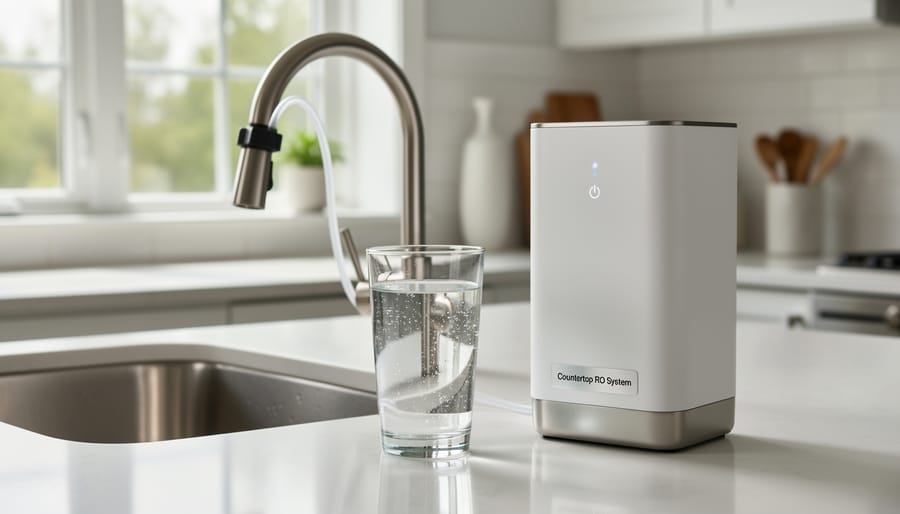
Countertop and portable RO systems sit on your kitchen counter and connect directly to your faucet with an adapter, no drilling, no permanent plumbing changes. They’re perfect for renters who can’t modify their space or anyone who wants to test-drive reverse osmosis before investing in an under-sink installation.
These units are smaller and process water more slowly than built-in systems, typically producing a pitcher or two of filtered water at a time. You can unplug them and take them with you when you move, which makes them surprisingly popular with people who relocate frequently. The trade-off is convenience: you’ll need counter space, and you can’t just turn on the tap for unlimited filtered water. But for a few hundred dollars, you get genuinely purified water without calling a plumber or asking your landlord’s permission.
What to Expect During Installation
Installing a reverse osmosis system sounds complicated, but most homeowners are surprised by how straightforward it actually is. If you’re comfortable with basic plumbing tasks like replacing a faucet or connecting a washing machine, you can probably install under-sink filter systems yourself in a few hours.
The typical setup involves mounting the RO tank and filtration unit under your kitchen sink, drilling a small hole in your countertop or sink deck for the dedicated faucet, and connecting the system to your cold water line with a simple saddle valve or T-connector. You’ll also run a drain line to your sink’s drainpipe for the wastewater. Most systems include color-coded tubing and push-to-connect fittings that snap together without tools, making the actual connections surprisingly easy.
The process usually follows a logical sequence: first, you’ll shut off the water and mount the components. Then you’ll drill the faucet hole if needed and install the dedicated tap. Next comes connecting the supply line, linking the tubing between components, and running the drain line. Finally, you’ll flush the system according to the manufacturer’s instructions, which typically means running water through it for 30 minutes to an hour to clear manufacturing residues.
Professional installation costs range from $150 to $400 depending on your area and any complications like tight spaces or outdated plumbing. Many homeowners choose this route for peace of mind, knowing the connections are secure and the warranty remains intact. Either way, once it’s set up, you’ll wonder why you worried, the hardest part is often just clearing out the space under your sink.
Real Stories: Homeowners Who Made the Switch
When Sarah Martinez noticed a metallic taste in her morning coffee, she initially blamed the coffee maker. After testing her well water, she discovered elevated iron levels and trace contaminants that standard filters weren’t catching. “I have two young kids, and knowing what was in our water kept me up at night,” she says. A local plumber installed an under-sink RO system in about three hours. “The installation was straightforward, he connected it to our cold water line and drilled a small hole for the dedicated faucet. The difference was immediate. Our coffee tastes normal again, and I don’t worry every time my kids fill their water bottles.” Sarah now uses her RO system daily to protect your family from contaminants that concerned her.
Marcus Chen’s situation was different. Living in an older Chicago apartment building, he dealt with inconsistent water quality despite city treatment. “Some days the water had a chlorine smell so strong I couldn’t drink it,” he recalls. Hesitant about installation as a renter, he opted for a countertop RO unit that required no plumbing modifications. “I was skeptical it would work without professional installation, but setup took maybe twenty minutes. You fill the reservoir, plug it in, and it does its thing.” Marcus noticed changes beyond taste: “My tea actually tastes like tea now, not like the municipal water system. I didn’t realize how much the water quality was affecting everything I drank.”
These stories reflect a common pattern: homeowners rarely regret the switch once they experience genuinely clean water flowing from their taps.
Ongoing Maintenance and What It Really Costs
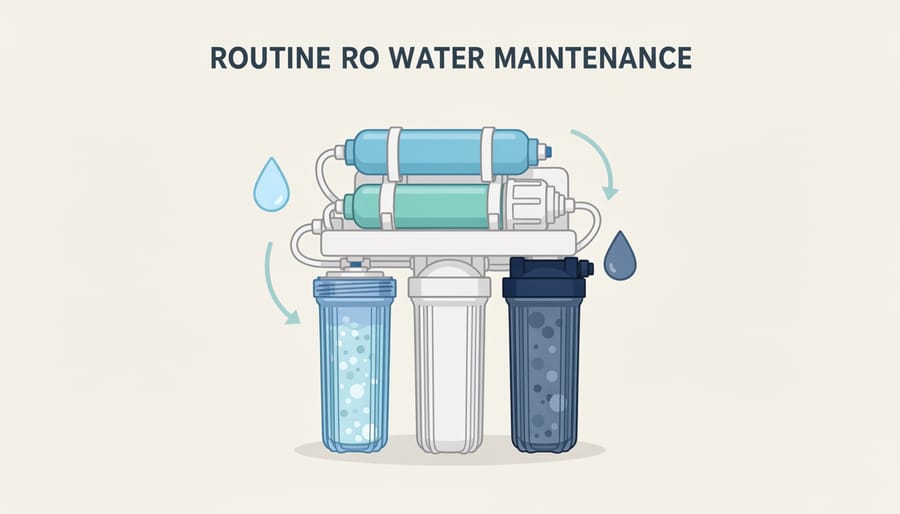
Owning a reverse osmosis system isn’t a set-it-and-forget-it situation, but the maintenance is far less demanding than most homeowners expect. Think of it like changing the oil in your car, regular upkeep keeps everything running smoothly.
The main ongoing task is replacing filters. Most RO systems have three to five filter stages, and each operates on its own schedule. The sediment and carbon pre-filters typically need swapping every six to twelve months, depending on your water quality and usage. These cost $30 to $60 annually. The RO membrane itself, the heart of the system, lasts two to three years and runs $50 to $100 to replace. The post-filter usually matches the pre-filter schedule. If you have hard water, you’ll replace filters more frequently, or you might choose a water softener to protect your investment.
The actual replacement process takes about ten minutes once you’ve done it the first time. Systems have color-coded housings or clear markings, and most filters twist off by hand. No special tools required.
Total annual costs for a typical under-sink system run $75 to $150 for filters, plus maybe $30 yearly for your water bill increase to account for the reject water. That works out to roughly $10 to $15 monthly for unlimited filtered drinking water, less than a family spends on a few cases of bottled water.
One homeowner in Ontario told us she sets phone reminders for filter changes and buys a year’s supply at once during sales. “I spend about $100 annually, and that’s it. We used to spend triple that on bottled water every few months.”
Common Concerns Addressed
When you start researching RO systems, you’ll quickly run into the same concerns mentioned in forum threads and buyer reviews. Let’s tackle them head-on with honest answers.
Does reverse osmosis waste a lot of water?
Yes, RO systems do send some water down the drain during filtration, typically 3-4 gallons of wastewater for every gallon of purified water produced, though newer models have improved this ratio. You can reduce the impact by collecting the reject water for plants or cleaning, since it’s not contaminated, just not purified.
Is it unhealthy to remove minerals from drinking water?
RO does strip out minerals like calcium and magnesium, but you get the vast majority of these nutrients from food, not water. If you’re concerned, many systems offer remineralization filters as an add-on, or you can simply eat a balanced diet.
Will an RO system damage my plumbing?
Not at all. Under-sink systems connect to your cold water line with a simple saddle valve or tee fitting and don’t alter your home’s plumbing infrastructure. The system operates at normal household water pressure and won’t cause any wear or stress to your pipes.
How much space does it actually take up?
A typical under-sink RO unit fits in a cabinet about the size of a small backpack, leaving room for cleaning supplies. Whole-house systems need more space (often installed in a garage or utility room), but for most homeowners, the under-sink footprint is surprisingly manageable.
Another common worry is whether RO is overkill if your municipal water already meets safety standards. Here’s the thing: meeting legal limits doesn’t mean your water is pristine. Standards allow trace amounts of hundreds of contaminants, and what’s deemed safe changes as research evolves. An RO system gives you control regardless of what’s happening at the treatment plant or in the pipes between there and your tap.
Some people hesitate because they’ve heard RO water tastes flat. That’s the absence of chlorine and dissolved solids talking, what you’re used to isn’t necessarily better, just familiar. Most people adjust within a week and find they actually prefer the clean taste, especially in coffee and tea where subtle flavors shine through.
The question isn’t whether these concerns are valid (they are), but whether the trade-offs make sense for your household. If you’ve tested your water and found contaminants, or if peace of mind matters to you, the water waste and maintenance become acceptable costs for genuinely pure drinking water.
The Unexpected Connection: RO Systems in Other Industries
If you’re hesitating about whether reverse osmosis really works, consider this: industries where water purity is absolutely non-negotiable stake their entire operations on RO technology. It’s not experimental or niche, it’s the proven standard.
Walk into any professional aquarium shop, and their sophisticated saltwater systems run on RO water. Marine life is incredibly sensitive to contaminants, and aquarium keepers rely on reverse osmosis to create the pristine baseline water they need before carefully adding minerals back. It’s the same technology in your kitchen, just scaled differently.
Commercial cannabis cultivation facilities use industrial RO systems to control every variable in their grow operations. When a crop’s value depends on precise nutrient delivery and contamination-free water, growers choose reverse osmosis without question.
High-end restaurants and coffee shops depend on RO systems too. That perfect espresso or crystal-clear ice? Often the result of reverse osmosis removing minerals and chlorine that would interfere with taste. Many commercial kitchens have installed these systems because inconsistent water quality wreaks havoc on their equipment and final products.
Medical and dental offices use RO-filtered water for sterilization equipment and procedures where even trace contaminants pose risks.
The point isn’t that your home needs laboratory-grade water. It’s that when professionals in demanding industries need reliable filtration, they consistently choose the same technology available for your kitchen tap. That track record speaks volumes.
You’ve now got the full picture of what reverse osmosis systems can do for your home and what living with one actually looks like. The question isn’t whether clean water matters, it obviously does, but whether an RO system is the right solution for your specific situation.
Start by understanding what you’re dealing with. Get your water tested, either through your municipal water report or a home testing kit. That’ll show you exactly what contaminants you’re facing and whether RO is addressing a real problem or just your peace of mind. Both are valid reasons, but knowing the facts helps you choose the right system and justify the expense.
Think honestly about your household. A family of five has different needs than a couple or someone living alone. Consider where you want filtered water, just the kitchen tap, or every faucet in the house? Your answers will steer you toward under-sink, whole-house, or countertop options.
Budget matters, but think beyond the sticker price. Factor in installation costs if you’re hiring a plumber, ongoing filter replacements, and the value of what you’re getting. Many homeowners find that the upfront investment pays off in better-tasting water, fewer bottles cluttering the recycling bin, and genuine peace of mind.
If you’re still on the fence, talk to a local plumber who installs these systems regularly. They can assess your home’s plumbing, recommend appropriate options, and give you realistic cost estimates. You don’t have to commit today, but taking that first step, testing your water, getting a quote, researching systems, moves you closer to the clean water you deserve.