
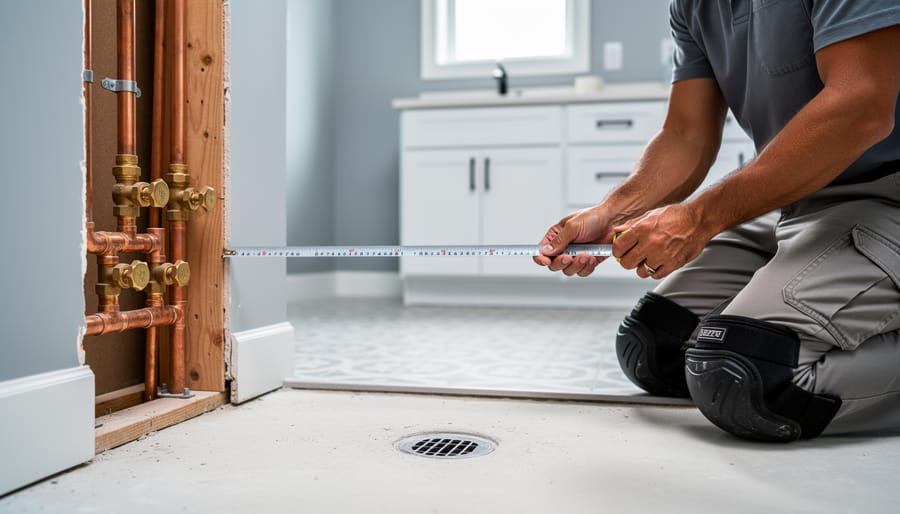
A full bathroom plumbing renovation in Kitchener typically runs between $8,500 and $18,000 in 2026, though smaller updates like replacing a toilet and vanity sink can cost as little as $2,200. The wide range comes down to four main drivers: the scope of work (minor fixture swap versus complete pipe replacement), the quality of fixtures and materials you choose, whether you’re relocating plumbing lines, and which professional you hire.
Key Takeaway: Budget $8,500, $18,000 for a complete Kitchener bathroom plumbing renovation. Your final cost depends on fixture quality, scope of work, pipe relocation needs, and labor rates, which vary significantly between licensed plumbers and general contractors.
Sarah, a homeowner in Doon South, learned this the hard way. She budgeted $10,000 for what seemed like a straightforward bathroom refresh but hadn’t factored in the cost of moving her shower drain three feet to accommodate a new layout. That single change added $2,400 to her project, pushing her into the higher end of the range. Her story isn’t unique. Most Kitchener homeowners underestimate plumbing costs because they focus on visible fixtures and forget about the hidden work behind the walls.
Understanding these numbers matters because plumbing often represents 20-25% of your total bathroom renovation budgets for Kitchener homes yet it’s the one area where cutting corners creates expensive problems down the line. The connection between what you spend now and what you save later runs deeper than most realize, especially as Kitchener’s aging housing stock (much of it built before 1980) frequently requires pipe upgrades to meet current code.
Bathroom Plumbing Costs in Kitchener by Project Type
The biggest driver of your bathroom plumbing bill in Kitchener is the scope of work you’re undertaking. A toilet swap costs vastly less than replumbing an entire bathroom, so your first step in budgeting is identifying exactly what you’re doing.
Here’s what Kitchener homeowners are paying in 2026 for common bathroom plumbing projects:
| Project Type | Typical Cost Range (Kitchener, 2026) | Timeline | Complexity |
|---|---|---|---|
| Basic Fixture Replacement | $400 – $1,800 | 1-2 days | Low |
| Partial Bathroom Renovation | $3,500 – $8,000 | 3-7 days | Medium |
| Full Bathroom Gut and Replumb | $8,000 – $18,000 | 2-4 weeks | High |
| New Bathroom Addition | $12,000 – $25,000+ | 3-6 weeks | Very High |
Basic fixture replacement covers swapping out a toilet, installing a new vanity and sink, or replacing a shower valve without touching the underlying pipes. You’re working with existing plumbing lines in their current locations. Most licensed plumbers in Kitchener charge $400-600 for a straightforward toilet installation, $800-1,200 for a vanity and sink combo, and $900-1,800 for replacing a tub or shower fixture if no tile work or wall opening is required. These are often same-day or next-day jobs.
Partial bathroom renovations involve updating several fixtures and may include some minor plumbing line adjustments, like moving a sink a foot to the left or upgrading from a tub to a walk-in shower in roughly the same spot. You’re not tearing everything out, but you’re making meaningful changes. Kitchener contractors typically quote $3,500-5,500 for replacing all fixtures without major layout shifts, climbing to $6,000-8,000 if you’re adding a second sink, upgrading drain sizes, or addressing outdated galvanized pipes discovered during the work.
A full bathroom gut and replumb means stripping the room to the studs and redoing all water supply lines, drain pipes, and venting from scratch. You’re replacing everything: fixtures, pipes, drain stacks if needed, and often bringing old plumbing up to current code. This is the project level where you uncover surprises in older Kitchener homes. Expect $8,000-12,000 for a small bathroom with standard fixtures, and $14,000-18,000 for larger bathrooms with premium materials or complex layouts that require significant rerouting.
New bathroom additions command the highest costs because you’re running entirely new supply lines from your main water service, connecting new drains to your existing stack or installing a new one, and ensuring proper venting. Everything is built from zero. Basement bathroom additions, common in Kitchener’s older neighborhoods, often require ejector pumps if you’re below the sewer line, adding $1,500-3,000 to the base plumbing cost. Second-floor additions may need stack extensions and structural considerations that push the upper end of that range.
Where Your Money Goes: Bathroom Plumbing Cost Breakdown
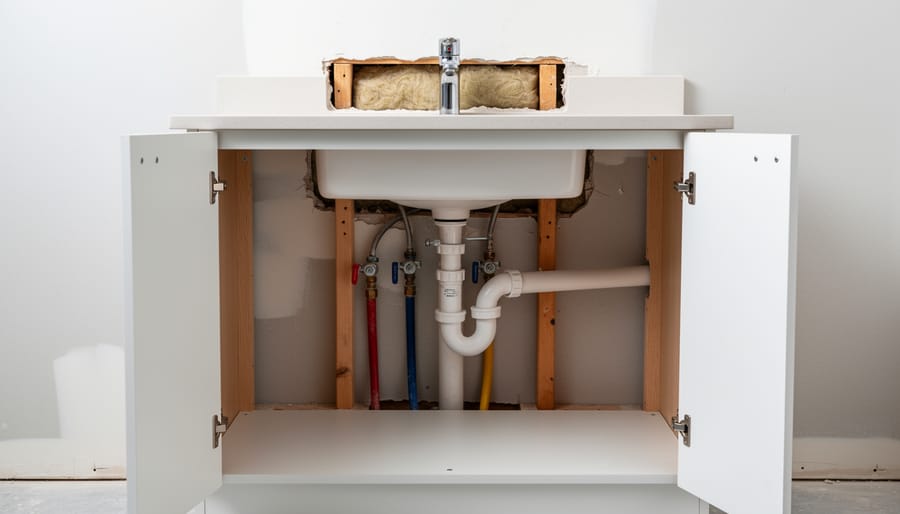
When you’re planning a bathroom plumbing renovation in Kitchener, understanding where each dollar actually goes helps you make smarter decisions and spot potential overcharges. Most homeowners are surprised to learn that the shiny new fixtures they’ve been browsing represent just one slice of the total cost pie.
Labor typically consumes the largest portion of your budget. Professional plumbers in Kitchener charge between $85 and $140 per hour in 2026, and bathroom renovations are labor-intensive work. A complete replumb might require 20 to 40 hours of skilled work, which quickly adds up. This isn’t just about connecting pipes, it includes careful planning, precise measurements, problem-solving when they encounter unexpected issues behind your walls, and ensuring everything meets code.
Here’s how a typical $8,000 bathroom plumbing renovation budget breaks down in Kitchener:
- Labor: 40-50% ($3,200-$4,000), plumber’s time for installation, troubleshooting, and final testing
- Fixtures: 25-30% ($2,000-$2,400), toilet, vanity, faucets, shower valve, and drain assemblies
- Pipes and materials: 15-20% ($1,200-$1,600), copper or PEX supply lines, drain pipes, fittings, solder, and connectors
- Permits and inspections: 3-5% ($240-$400), City of Kitchener building permits and required code inspections
- Disposal and prep work: 5-8% ($400-$640), removing old fixtures, hauling away debris, and preparing spaces
- Contingency for surprises: 5-10% ($400-$800), hidden rot, outdated wiring that needs updating, or code compliance issues
The “hidden” costs often catch homeowners off guard. Opening up walls frequently reveals problems that weren’t visible during the initial quote, corroded pipes that should be replaced while everything’s accessible, subfloor damage from old leaks, or venting that doesn’t meet current standards. A toilet repair that seemed straightforward might uncover a cracked flange or rot around the base that needs addressing before the new toilet goes in.
Materials quality creates significant cost variation within each category. Choosing builder-grade fixtures versus mid-range options might shift $1,500 from the fixture line to other areas, while opting for PEX instead of copper piping can reduce the materials portion by 30-40%. Your plumber can walk you through these trade-offs based on your home’s specific needs and your long-term plans.
What Changes Your Bathroom Plumbing Renovation Budget
Fixture Quality and Complexity
Your fixture choices matter more than almost anything else in your bathroom plumbing budget. A builder-grade toilet costs $150, $300, while a dual-flush model with soft-close seat and water-saving features runs $400, $800. High-end brands like Kohler or Toto can push past $1,200. The same pattern holds for every fixture: basic vanities start around $300, mid-range ones land at $800, $1,500, and custom pieces exceed $3,000.
Sarah from Kitchener learned this firsthand during her 2025 renovation. She splurged on a $2,400 soaking tub but chose mid-range options for her faucet and sink saving $600 without sacrificing quality. Her walk-in shower with frameless glass and rainfall head cost $3,200 installed, compared to $1,800 for a basic alcove setup.
Installation complexity drives costs too. Wall-mounted toilets need in-wall carriers, adding $400, $600 in labor. Freestanding tubs require floor reinforcement that basic drop-ins don’t. Sarah’s plumber spent an extra day on her tub installation alone, which meant $800 more in labor she hadn’t budgeted for initially.
Layout Changes and Moving Plumbing Lines
Moving your toilet, sink, or shower to a new spot in the bathroom is one of the biggest cost drivers you’ll encounter. When you keep fixtures in their original locations, plumbers work with existing drain lines and water supply pipes, this is straightforward and relatively affordable. But relocating a toilet even two feet means breaking into your floor or walls, rerouting drain pipes (which must maintain proper slope for drainage), extending or repositioning water lines, and potentially dealing with structural obstacles like joists or ductwork.
The toilet causes the most headaches because its drain requires a large diameter pipe with specific slope requirements. Moving it can add $800 to $2,500 to your Kitchener renovation budget, depending on how far you’re shifting it and what’s hiding under your floor. Relocating sinks or showers costs less, typically $400 to $1,200, but still requires new plumbing runs, additional fittings, and more labor hours than a same-location replacement.
Pipe Materials and Home Age
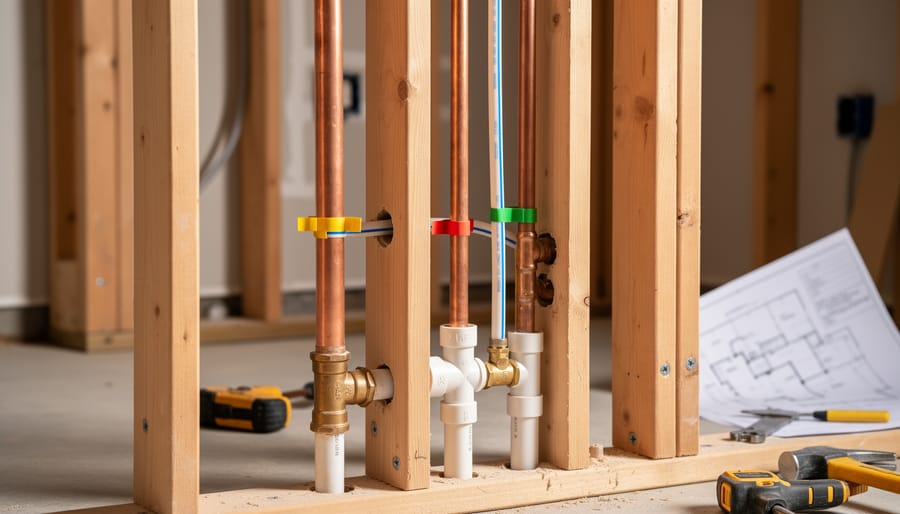
The pipe material you choose directly impacts both upfront costs and long-term durability. Copper piping, the traditional standard in many Kitchener homes, typically costs $8, $12 per linear foot installed in 2026. It lasts decades and handles heat beautifully, but labor runs higher because soldering copper requires specialized skills. PEX (cross-linked polyethylene) has become increasingly popular for bathroom renovations, running $3, $6 per linear foot installed. It’s flexible, easier to work with, and resistant to freezing, a real advantage in Kitchener winters. Some plumbers also use CPVC, which falls in the middle price-wise at $4, $8 per foot.
Older homes present special budget considerations. If your Kitchener house was built before 1980, your plumber might discover galvanized steel pipes, lead solder connections, or outdated drain systems during renovation. These don’t meet current code and must be replaced, adding $1,500, $4,000 to your project depending on extent. Cast iron drains common in vintage homes may need replacement if corroded. Always budget extra contingency for older properties, hidden plumbing issues surface once walls open up.
Permits, Inspections, and Local Requirements
In Kitchener, most bathroom plumbing renovations require a building permit, which costs between $150 and $400 depending on your project’s scope. You’ll need permits for moving fixtures, adding new plumbing lines, or changing drain locations, even if you’re keeping everything in the same room. Simple fixture swaps on existing connections typically don’t need permits.
The City of Kitchener follows Ontario Building Code requirements, and inspections are mandatory at rough-in and final stages. Budget an extra $300 to $500 for contractor time during these inspections. Skipping permits might save money upfront, but it creates problems when selling your home and voids insurance coverage if plumbing issues arise. Licensed plumbers know local requirements and handle permit applications, which saves you headaches navigating city hall. Permit processing takes one to three weeks, so factor this into your renovation timeline.
DIY vs. Hiring a Professional Plumber in Kitchener
Deciding between responsible DIY work and hiring a professional plumber comes down to understanding your skills, the complexity of the task, and what’s actually legal in Kitchener.
Some bathroom plumbing tasks are genuinely DIY-friendly if you’re handy and patient. Replacing a toilet, swapping out a vanity faucet, installing a new showerhead, or upgrading bathroom accessories won’t require a licensed plumber. You’ll save the labor costs (typically $80-$120 per hour in Kitchener) and gain the satisfaction of completing the work yourself. These straightforward jobs have clear instructions, don’t involve major code compliance issues, and give you room to learn without catastrophic consequences if something goes slightly wrong.
But here’s where it gets serious: anything involving new drain lines, major water supply changes, moving plumbing fixtures to different locations, or work that requires a permit legally requires a licensed plumber in Ontario. You can’t just watch YouTube videos and replumb your bathroom. The Ontario Building Code exists for good reasons, to prevent flooding, sewage backups, contaminated water, and structural damage. Insurance companies can deny claims if unpermitted DIY work causes damage, and you’ll face costly remediation when you eventually sell and the home inspection reveals non-compliant plumbing.
Pros of DIY
- Immediate savings of $800-$3,000+ in labor costs on simple fixture replacements.
- Flexibility to work at your own pace without scheduling around contractor availability.
- Hands-on learning experience that builds your home maintenance skills.
Cons of DIY
- No warranty coverage if installations fail or cause water damage later.
- Risk of code violations that create problems during home inspections or insurance claims.
- Significant time investment, especially if you encounter unexpected complications.
- Potential for costly mistakes that require professional correction anyway.
Professional plumbers bring more than just technical skills, they understand what plumbers do in terms of code requirements, proper venting, slope calculations for drainage, and how different bathroom components interact with your home’s overall plumbing system. They pull permits, arrange inspections, and warranty their work. When your renovation involves anything structural, any layout changes, or updates to aging infrastructure in older Kitchener homes, that expertise becomes essential.
A smart middle ground? Tackle the cosmetic and simple replacement tasks yourself, then bring in a licensed professional for the technical plumbing work. You’ll maximize your budget without compromising safety or resale value.
Real Stories: Bathroom Plumbing Renovations in Kitchener
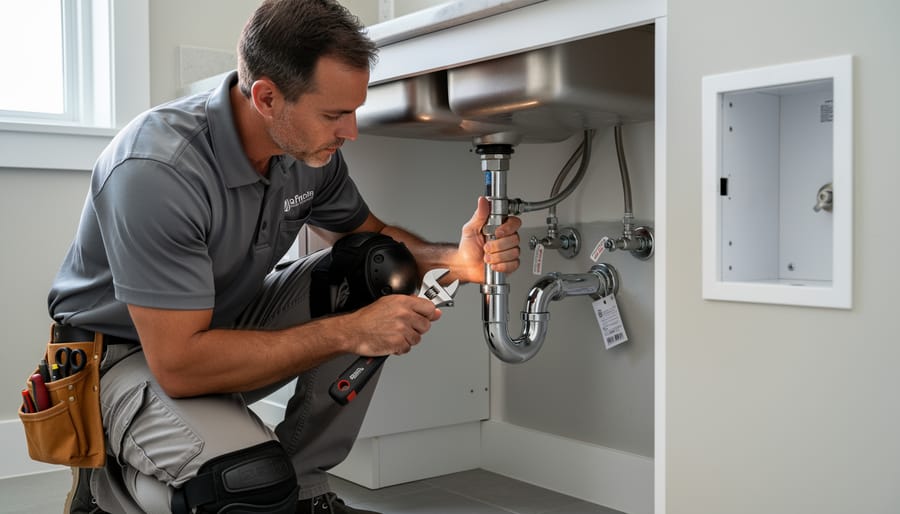
When Maria started her bathroom renovation in her Victoria Hills home, she budgeted $8,000 for the plumbing portion. “We thought we were being generous,” she says. “Then the plumber opened the wall.” Behind her 1970s-era vanity, he discovered corroded galvanized pipes that needed replacement before any new fixtures could go in. The final cost? $11,500. “I wish someone had told me to budget for the unknown in older homes. Now I tell everyone: add 30% for surprises.”
Her experience isn’t unique. David, renovating a condo bathroom near downtown Kitchener, learned that moving his toilet just three feet to improve the layout added $2,200 to his quote. “The plumber explained it all, breaking concrete, running new drain lines, getting inspections, but I hadn’t realized how expensive those few feet would be. I kept the original layout on my second bathroom and saved that money for better fixtures instead.”
Jennifer’s story offers a different lesson. She hired her brother-in-law, who “knew plumbing,” to save money on her Forest Heights bathroom. When the shower valve leaked six months later, a licensed plumber discovered code violations that required $3,000 in corrections. “The initial savings evaporated fast,” she admits. “Permits and proper licensing matter, especially when you’re planning to sell.”
Not every surprise is negative. Tom found his plumber during a slow January period and negotiated a 15% discount on labor. “He had availability and was happy for the work. Timing really does matter.”
These stories share a common thread: bathroom plumbing costs vary wildly based on what’s behind your walls, what you’re changing, and who’s doing the work. Budget conservatively, expect the unexpected, and choose your contractor carefully. Real renovations rarely match the initial estimate exactly.
How to Keep Your Bathroom Plumbing Renovation on Budget

Keeping your bathroom renovation within budget doesn’t mean sacrificing quality, it means planning smart and knowing where your money makes the biggest impact. Here’s how Kitchener homeowners can control costs without cutting corners.
- Get at least three detailed quotes from licensed Kitchener plumbers. Don’t just compare bottom-line prices, look at what’s included, materials specified, warranty coverage, and timeline estimates. A slightly higher quote might include better fixtures or more thorough prep work that saves you money later.
- Plan your fixture purchases strategically. Shop sales at local Kitchener retailers like Home Depot or independent showrooms, but buy before your plumber starts work. Last-minute fixture choices delay projects and can push you toward whatever’s in stock rather than what fits your budget.
- Build a 15-20% contingency fund for surprises. Older Kitchener homes often hide issues behind walls, corroded pipes, inadequate venting, or structural problems that only show up during demolition. This buffer prevents panic when your plumber discovers something that needs immediate attention.
- Time your renovation thoughtfully. Spring and fall tend to be busiest for Kitchener contractors, which can mean higher rates and longer waits. Winter projects might offer more flexible scheduling and negotiating room, though you’ll want to ensure the space stays heated during work.
- Address existing problems before they escalate. If you check for leaks or notice slow drains before starting your renovation, fixing them costs less than discovering major water damage mid-project.
Understand when to splurge and when to save. Spend on quality rough-in plumbing, pipes, valves, and drain assemblies, because replacing these later means tearing into finished walls. You can always upgrade a basic vanity or mirror down the road, but relocating a poorly installed toilet drain is expensive and disruptive.
Don’t pay for work you can handle yourself. Demolition, painting, and installing accessories like towel bars are DIY-friendly tasks that trim labor costs. Save the licensed plumber’s time for actual plumbing work where their expertise and code compliance matter.
Finally, resist scope creep. That beautiful rainfall shower or heated floor sounds amazing, but adding features mid-project inflates costs fast. Stick to your original plan, or deliberately pause the renovation to re-budget if you want meaningful changes.
Frequently Asked Questions About Bathroom Plumbing Costs in Kitchener
Homeowners planning bathroom renovations in Kitchener often have similar questions about the process, costs, and logistics. Here are answers to the most common concerns we hear from readers in the region.
Do I need a permit for bathroom plumbing work in Kitchener?
Most bathroom plumbing renovations in Kitchener require a permit, especially if you’re moving fixtures, adding new plumbing lines, or doing significant work beyond simple fixture replacement. Your plumber can typically pull permits on your behalf, with costs ranging from $150 to $400 depending on project scope.
How long does a typical bathroom plumbing renovation take?
A basic fixture replacement might take one to two days, while a partial renovation usually requires three to five days. Full bathroom gut-and-replumb projects typically take one to two weeks, though timeline depends on permit approval, material availability, and scope of work.
What unexpected costs should I budget for?
Hidden issues often surface once walls are opened, particularly in older Kitchener homes. Common surprises include outdated plumbing that needs updating to current code, water damage requiring repair, asbestos or lead pipe abatement, and subfloor replacement. Building a 15-20% contingency into your budget helps cover these discoveries.
How do I find a qualified plumber in Kitchener?
Look for licensed plumbers with valid Ontario certifications, local references, and liability insurance. Check online reviews, ask neighbors for recommendations, and get at least three detailed quotes before deciding. Our site’s plumber directory can help you connect with qualified professionals in the Kitchener area.
Are there financing options for bathroom plumbing renovations?
Many Kitchener homeowners use home equity lines of credit, personal loans, or contractor financing programs to fund bathroom renovations. Some plumbing companies offer payment plans, and you might qualify for energy rebates if you’re installing water-efficient fixtures.
When is the best time to schedule a bathroom renovation to save money?
Winter months (January through March) tend to be slower for plumbers in Kitchener, which sometimes means better availability and more competitive pricing. However, don’t compromise on choosing the right contractor just to hit a certain season.
Beyond these frequently asked questions, remember that every bathroom renovation is unique. What works for your neighbor’s 1970s bungalow might look completely different from what your century home needs. Getting personalized quotes from local plumbers gives you the most accurate budget picture for your specific situation and helps you avoid relying on generalized estimates that might not match your reality.
Planning your bathroom plumbing renovation in Kitchener doesn’t have to feel overwhelming. Now that you understand what drives costs, from fixture choices to layout changes to your home’s age, you’re equipped to make decisions that balance your vision with your budget.
Remember, the price ranges we’ve discussed are starting points. Your actual costs will depend on your specific project, the plumbers you choose, and the unique characteristics of your home. That’s why getting personalized quotes from local professionals is essential. Reach out to several Kitchener plumbers, describe your project in detail, and compare not just prices but also expertise and communication style.
If questions come up as you plan, our Ask a Plumber feature connects you directly with experienced professionals who can address your specific concerns. You’ll also find trusted local contractors in our Kitchener plumber directory, homeowners like you have worked with these pros and shared their experiences.
You’ve done the research. You know what to expect and what questions to ask. That knowledge puts you in control of your renovation. Whether you’re replacing a single fixture or gutting the entire bathroom, you’re ready to move forward confidently and create the space you’ve been imagining.