If you’re wondering whether plumbing offers a solid career path, you’re asking the right question at the right time. The skilled trades are experiencing a worker shortage just as demand continues climbing, and plumbers sit at the center of this opportunity. Most people flush their toilet, turn on their shower, and never think twice about the complex systems making modern life possible. But someone has to install, repair, and maintain all of it.
The numbers tell a compelling story. Plumbers earn a median salary around $60,000 annually, with experienced professionals and business owners clearing six figures. You can start earning while you learn through apprenticeships instead of accumulating college debt. The work is stable because plumbing emergencies don’t wait for economic booms, and new construction always needs qualified tradespeople.
But let’s be honest about what you’re considering. This isn’t a desk job. You’ll work with your hands, sometimes in tight spaces or uncomfortable conditions. You’ll handle problems that others would rather not think about. The learning curve is steep, and physical demands are real.
Still, plumbing offers something increasingly rare: a clear path from beginner to business owner, work that can’t be outsourced, and the satisfaction of solving real problems for real people. Whether you’re 18 or 48, considering a complete career change or helping someone explore their options, understanding what plumbing actually offers matters more than romantic notions about trades or outdated assumptions about “blue collar” work.
What Does a Plumber Actually Do?
If you picture plumbing as just unclogging drains and fixing leaky faucets, you’re only seeing a sliver of what plumbers actually do. The reality is far more diverse and interesting.
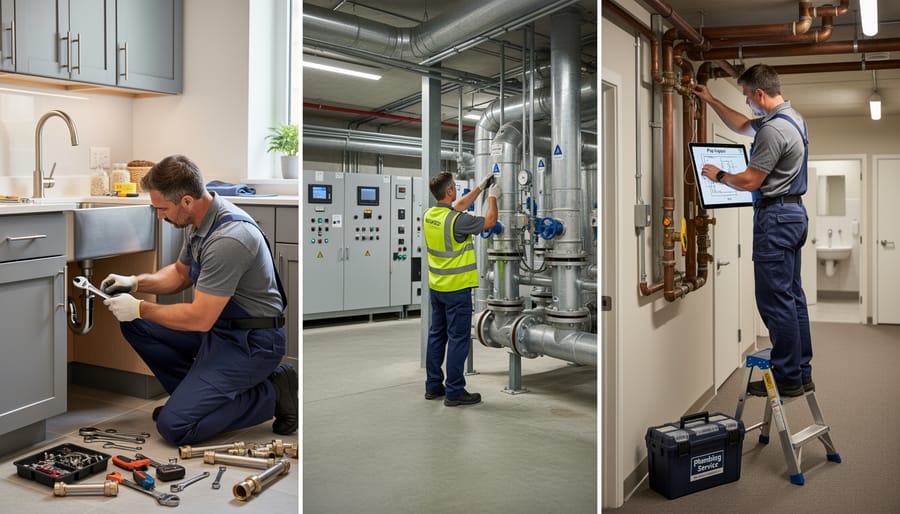
Plumbers work across three main environments, each with its own character. Residential plumbers install and repair systems in homes, from water heaters to shower valves. Commercial plumbers handle larger-scale projects in office buildings, schools, and retail spaces, where the systems are more complex and serve many more people. Industrial plumbers work in factories, power plants, and manufacturing facilities, dealing with specialized equipment, chemical lines, and high-pressure systems that keep production running.
Within these settings, many plumbers carve out specialties. Some focus on new construction, reading blueprints and installing complete plumbing systems in buildings that don’t exist yet. Others become service and repair experts, diagnosing problems and fixing emergencies. Green building and sustainable plumbing is growing fast, with plumbers installing rainwater harvesting systems, greywater recycling, and ultra-efficient fixtures. There are even plumbers who specialize in medical gas systems for hospitals or backflow prevention for water safety.
Take Marcus, who left retail management at 28 to become an apprentice plumber. “I thought I’d just be fixing toilets forever,” he told us. “But in my first year alone, I helped install radiant floor heating in a custom home, replaced commercial boilers in an apartment complex, and worked on a brewery’s specialized water filtration system. Every week brought something different.”
The physical demands are real. You’ll crawl into tight spaces, lift heavy pipes, and work outdoors in all weather. But you’re also problem-solving constantly, working with your hands and your mind. By the end of each day, you can see exactly what you accomplished. That combination of variety, tangible results, and genuine problem-solving is what keeps people in the trade for decades.
The Money Question: What Can You Actually Earn?
Let’s talk numbers, because that’s often the first question on everyone’s mind. The good news? Plumbing offers a clear path to a solid income, and you don’t need to wait decades to start earning well.
According to the Bureau of Labor Statistics the median annual wage for plumbers sits around $60,000, but that figure doesn’t tell the whole story. Your earning potential grows substantially as you gain experience and credentials.
| Career Stage | Typical Experience | Annual Salary Range |
|---|---|---|
| Apprentice | 0-4 years | $30,000 – $45,000 |
| Journeyman | 4-8 years | $50,000 – $75,000 |
| Master Plumber | 8+ years | $70,000 – $95,000 |
| Business Owner | Varies | $80,000 – $150,000+ |
These ranges shift considerably based on where you live. Plumbers in metropolitan areas like New York, San Francisco, or Boston often earn 20-30% more than the national average, though you’ll need to factor in higher living costs. Rural areas typically offer lower base wages but sometimes provide steadier work through service contracts with agricultural operations or municipal systems.
Here’s something that surprised Marcus, a second-year apprentice from Ohio who shared his story: “I expected to scrape by during my apprenticeship, but I’m making more now than I did in my previous office job. And I’m actually learning something valuable every day.”
Several factors beyond experience level influence your paycheck. Commercial and industrial plumbers generally earn more than residential specialists. Emergency and on-call work commands premium rates. Union membership provides negotiated wage scales and benefits packages that can significantly boost total compensation. Specialized skills like medical gas systems, backflow prevention, or green technology installations open doors to higher-paying niches.
The real earning potential comes when you’re ready to hang your own shingle. Business owners control their pricing, choose their projects, and build equity in something they own. Sure, you’ll handle the business side too, but many plumbers find that running crews and managing projects pays better than turning wrenches alone. The path from apprentice to business owner isn’t just possible; it’s a well-worn route that thousands of successful plumbers have followed.
Getting Started: Your Path from Zero to Plumber
The Apprenticeship Route (Most Common)
Here’s the good news: you don’t need a four-year college degree or mountains of student debt to start a plumbing career. Most plumbers begin through apprenticeships, which combine hands-on training with classroom instruction. You earn a paycheck while learning the trade, which is a huge advantage over traditional college paths.
Getting started is more straightforward than many people realize:
- Complete high school or get your GED. Basic math and science help, but you don’t need advanced courses.
- Search for registered apprenticeship programs through local unions, trade schools, or plumbing contractors in your area.
- Apply to programs. Some require a simple interview or basic aptitude test.
- Begin your apprenticeship, typically lasting four to five years, working full-time alongside experienced plumbers.
During your apprenticeship, you’ll spend about 2,000 hours per year learning on the job and attend technical classes in the evenings or on weekends. Yes, it’s demanding. But you’re making money from day one, usually starting around $15 to $20 per hour and increasing as you gain skills.
Jennifer from Ohio shared her story with us: “I was terrified applying with just my high school diploma while my friends went to college. Five years later, they have debt and I have a journeyman license, a reliable income, and zero regrets.”
The construction industry needs skilled workers desperately right now, which means apprenticeship openings are plentiful. Local unions and contractor associations actively recruit because experienced plumbers are retiring faster than new ones are entering the field.
Trade Schools and Vocational Programs
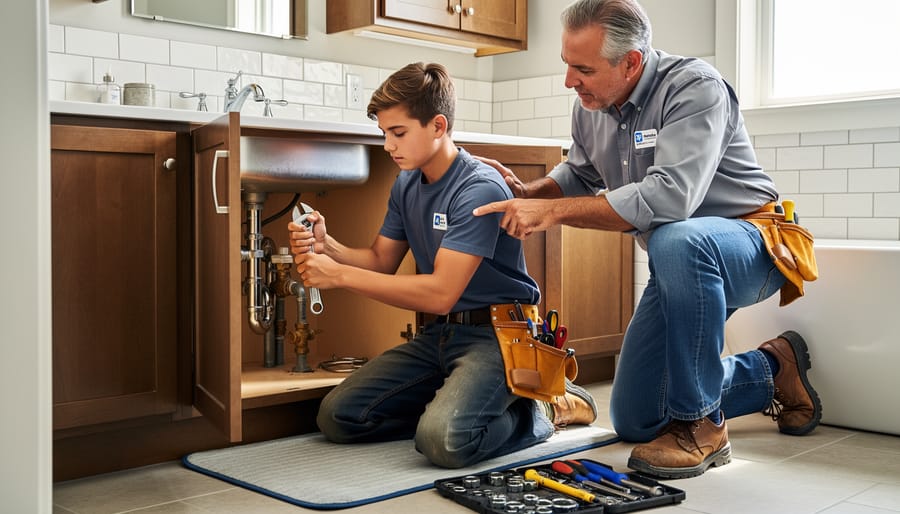
Many aspiring plumbers choose to start their journey at a trade school or vocational program before entering the field. These programs typically run anywhere from six months to two years and provide comprehensive training in both theory and hands-on skills. You’ll learn pipe fitting, code requirements, blueprint reading, and safety practices in a structured classroom environment.
The cost varies widely depending on your location and the institution. Community colleges often offer the most affordable option, with total program costs ranging from $3,000 to $15,000. Private trade schools can run higher, sometimes reaching $20,000 or more. However, many programs qualify for federal financial aid, and some employers will reimburse tuition if you commit to working for them after graduation.
Here’s the trade-off: formal education gives you a solid foundation and credential before you start earning, while jumping straight into an apprenticeship means you get paid while you learn. Sarah, a career-changer from retail management, found that her vocational diploma helped her land a better apprenticeship with higher starting pay. “The investment gave me confidence and made me more attractive to quality employers,” she shared.
The best route depends on your learning style, financial situation, and how quickly you need income. Some people thrive with structured education first, while others prefer learning on the job from day one.
Licensing and Certification
Before you can hang your own shingle or advance beyond apprentice work, you’ll need proper credentials. The good news? The path is clear, though licensing requirements vary by state so your journey will depend on where you live.
Most states require plumbers to complete an apprenticeship program (usually 4-5 years), pass a licensing exam, and sometimes fulfill continuing education requirements. Some regions distinguish between journeyman and master plumber licenses, with the latter allowing you to supervise others and run your own business.
Why does this matter for your career? Simple. Licensed plumbers earn more and have greater flexibility. Sarah, a journeyman plumber in Colorado, shared that her license opened doors to commercial projects and eventually allowed her to start a small contracting business on weekends. Without that credential, she’d still be limited to residential repairs under someone else’s supervision.
The certification process might seem like one more hoop to jump through, but it’s really a professional milestone that separates hobbyists from skilled tradespeople. Employers actively seek licensed plumbers, and many construction companies won’t touch projects without properly credentialed workers on site.
The Real Advantages of a Plumbing Career
Let’s talk about what actually makes plumbing worth considering as a career, beyond the surface-level stuff you’ve probably already heard.
First up, job security. People will always need plumbers. Toilets break, pipes burst, and water heaters fail regardless of what’s happening in the economy. During the 2008 recession, while construction workers struggled to find jobs, service plumbers stayed busy because homeowners couldn’t exactly postpone a backed-up sewer line. That kind of stability is rare.
Speaking of financial benefits, here’s a big one: no crushing student debt. While your friends are graduating college with $50,000 or more in loans, you’re getting paid to learn through an apprenticeship. You’re earning from day one, building skills that translate directly into higher wages. Sarah from Oregon shared with us how she started her apprenticeship at 19 and bought her first home at 24, something her college-graduate friends couldn’t dream of doing yet.
The work itself offers something many desk jobs don’t: genuine problem-solving satisfaction. Every day presents different challenges. You’re not staring at spreadsheets or sitting in endless meetings. You show up, diagnose an issue, fix it, and see immediate results. There’s real satisfaction in solving a mystery leak or getting someone’s heat working again on a cold night.
You’ll also stay physically active without needing a gym membership. Sure, crawling under houses isn’t glamorous, but neither is sitting in a cubicle for 40 years developing back problems. The physical nature of plumbing keeps you moving, which many people find preferable to sedentary office work.
Then there’s the ownership opportunity. Plumbing skills translate directly into business ownership potential. Many plumbers start their own companies within five to ten years, controlling their schedules and income. The overhead is relatively low compared to other businesses, you already know the trade, and customers come from word-of-mouth referrals.
The industry also intersects with growing fields like green technology and smart home systems, meaning the work continues evolving rather than becoming obsolete.
These advantages aren’t theoretical. They’re what actual plumbers experience daily.
The Challenges You Should Know About
Let’s be real: plumbing isn’t a desk job, and it comes with challenges you should understand before diving in. The physical demands are genuine. You’ll be crawling into tight spaces, working in awkward positions, and lifting heavy equipment regularly. Your knees and back will feel it, especially in the early years. Mike, a residential plumber in Ohio, shared that his first year left him sore most evenings. “I wasn’t prepared for how much kneeling I’d do under sinks,” he told us. “I learned pretty quickly to invest in good knee pads and to stretch every morning.”
The emergency calls are another reality. Many plumbers take on-call shifts, which means your phone might ring at 2 a.m. about a burst pipe. If you value predictable evenings and weekends, this aspect deserves serious thought. Some plumbers handle this by specializing in new construction or commercial work, where emergencies are less common.
Then there’s the mess. You’ll encounter situations that aren’t glamorous. Clogged drains, sewage backups, and flooded basements are part of the territory. Sarah, who’s been plumbing for eight years, laughed when she recalled her worst day: “Let’s just say I learned to always keep spare clothes in my truck.” She added that you develop a thick skin and a good sense of humor pretty quickly.
Customer interactions can be tough too. You’re often meeting people during stressful moments, dealing with frustrated homeowners or demanding property managers. Communication skills matter just as much as technical ones. Learning to stay calm, explain problems clearly, and set realistic expectations makes a huge difference. The plumbers who struggle most are often those who underestimate this people-facing side of the job.
These challenges are real, but they’re also manageable and predictable. You know what you’re getting into, which is more than many careers offer.
Where Plumbing Takes You: Career Growth and Specialization
Here’s something most people don’t realize: plumbing isn’t one job. It’s a launching pad to dozens of specialized careers, many of them barely invented a decade ago.
Take Marcus, a residential plumber who pivoted to medical gas systems after ten years of traditional work. He now installs and maintains oxygen, nitrogen, and vacuum systems in hospitals. The pay jumped 40%, and he works in climate-controlled environments rather than crawl spaces. “I’m still a plumber,” he says, “but now I’m part of keeping people alive during surgery.”
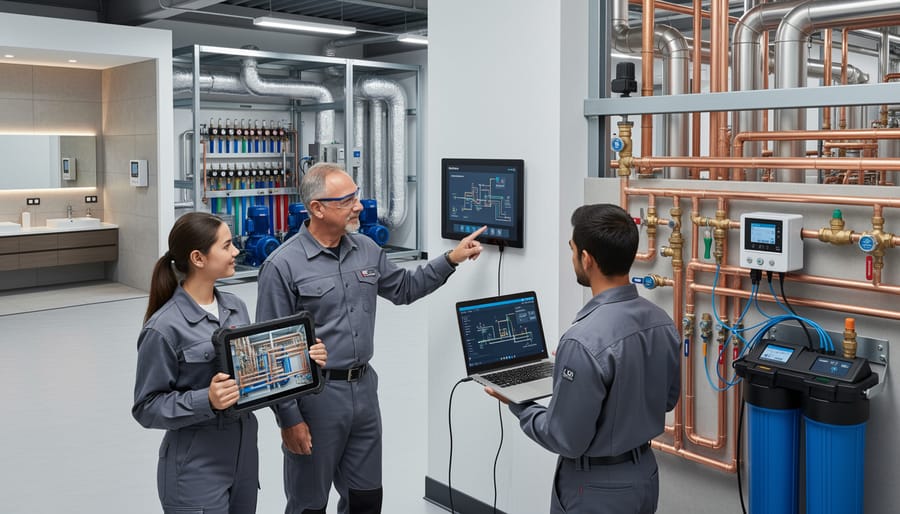
Green plumbing technology has exploded as an industry. Specialists in rainwater harvesting, greywater recycling, and radiant heating systems are in high demand as building codes tighten and homeowners chase sustainability. These plumbers often consult during building design, putting them in suits as often as work boots.
Commercial and industrial plumbing opens entirely different doors. Installing process piping for breweries, semiconductor manufacturing plants, or pharmaceutical facilities requires understanding chemistry and industrial processes. The work is complex, and the compensation reflects that.
Here’s where it gets really interesting. Cannabis cultivation facilities need sophisticated irrigation, drainage, and climate control systems. Data centers require precision cooling infrastructure. Luxury residential projects want smart water systems that monitor usage and detect leaks before damage occurs.
Some plumbers transition into HVAC integration, combining water systems with heating and cooling. Others become estimators, reading blueprints and calculating material costs for construction companies. A few launch their own businesses or become inspectors and code enforcement officers.
Sarah started as an apprentice doing basic repairs. Twelve years later, she runs a team specializing in historic building restorations, carefully matching old fixtures while upgrading to modern efficiency standards. “I never expected to become a preservation specialist,” she laughs. “But plumbing history is fascinating, and property owners pay well for someone who understands both old and new systems.”
The career doesn’t plateau. It branches into opportunities most people never knew existed.
Starting Your Own Plumbing Business
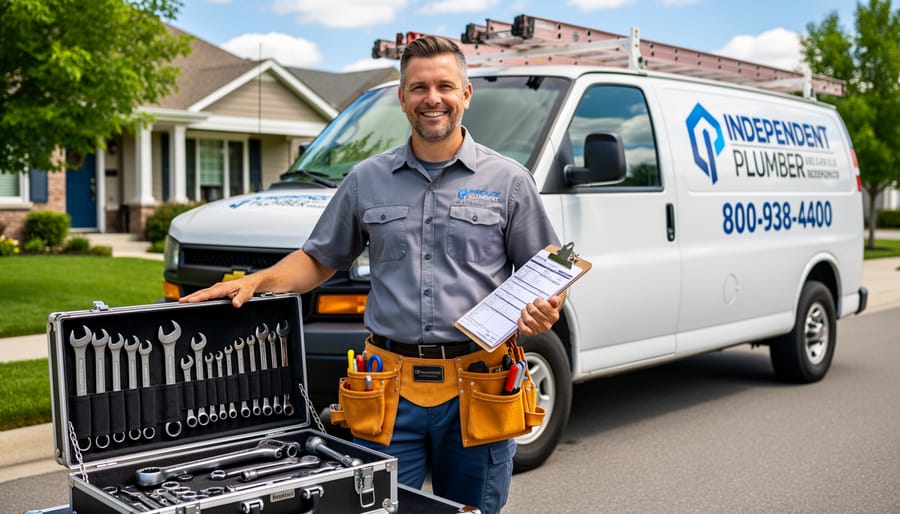
Once you’ve built solid experience and a reputation, running your own plumbing business becomes a real option. Many plumbers make this move after five to ten years in the field, though there’s no magic timeline. The question isn’t just whether you can fix pipes, but whether you’re ready to handle the business side too.
Going solo means you’re suddenly wearing multiple hats. You’ll handle scheduling, invoicing, marketing, insurance, licensing, and customer service alongside the actual plumbing work. One plumber I know, Sarah, started her business after seven years with a larger company. She says the technical work was the easy part compared to learning QuickBooks and figuring out how to price jobs competitively while still making a profit.
The financial upside can be significant. Where employed plumbers might earn $50,000 to $75,000 annually, successful business owners often double or triple that once established. You set your own rates, choose your projects, and keep the profits. But you also absorb the risks. Slow months happen. Equipment breaks. Customers sometimes don’t pay on time.
Start small if you’re considering this path. Many plumbers begin with weekend side jobs while still employed, building a client base gradually. You don’t need a fleet of trucks right away. A reliable vehicle, quality tools, proper licensing, and insurance get you started. Word of mouth grows faster than you’d expect in this industry.
The construction and real estate industries provide steady work for independent plumbers, especially if you develop relationships with contractors and property managers. Some plumbers carve out specialties like high-end bathroom renovations or commercial work, which helps them stand out.
Business ownership isn’t for everyone, and that’s perfectly fine. But if you enjoy independence and don’t mind the administrative challenges, plumbing offers a clearer path to entrepreneurship than many careers.
Is Plumbing Right for You?
So, would you actually enjoy working as a plumber? Let’s get real for a moment.
This career thrives on certain traits. If you’re someone who gets satisfaction from solving puzzles and fixing things with your hands, plumbing offers that daily. You’ll need to be comfortable getting dirty, working in tight crawlspaces, and occasionally dealing with less-than-pleasant situations. One plumber told us, “My first week, I almost quit after crawling under a house to fix a sewage leak. By month two, I realized the gross stuff becomes routine, and the problem-solving never gets old.”
Physical stamina matters here. You’re lifting heavy equipment, kneeling, bending, and sometimes working in awkward positions for hours. If chronic back or knee issues run in your family, that’s worth considering.
Ask yourself a few questions: Do you prefer working independently or need constant collaboration? Plumbers spend significant time working alone, though you’ll interact with customers regularly. Are you comfortable with irregular hours? Emergency calls happen, and some plumbers are on-call nights and weekends.
The personality fit is just as important as the skills. Successful plumbers tend to be patient problem-solvers who don’t mind a non-traditional office setting. They’re comfortable with continuous learning since building codes and technologies constantly evolve.
If you need predictable 9-to-5 hours, dislike physical labor, or prefer purely digital work environments, plumbing might feel like a mismatch. And that’s perfectly fine. Knowing what doesn’t fit you is just as valuable as discovering what does.
So, is plumbing a good career? If you’ve read this far, you already know the answer. The earning potential is real, the demand isn’t going anywhere, and you can build a career without spending years in a classroom or drowning in student debt. That’s a combination most professions simply can’t offer.
If this path sounds right for you or someone you’re guiding, the next step is simple. Look up apprenticeship programs in your area. Talk to working plumbers about what their days actually look like. Visit a trade school open house. These conversations and visits will tell you more than any article ever could.
What stands out most about plumbing is what people don’t see at first glance: the variety, the problem-solving, the independence, and yes, the genuine respect that comes from mastering a skill most people desperately need but can’t do themselves. You’re not just fixing pipes. You’re protecting health, enabling construction projects, and keeping entire communities running.
This career rewards the people who show up, learn continuously, and take pride in their work. If that sounds like you, there’s a spot waiting in this trade. And it might just be the best decision you never saw coming.