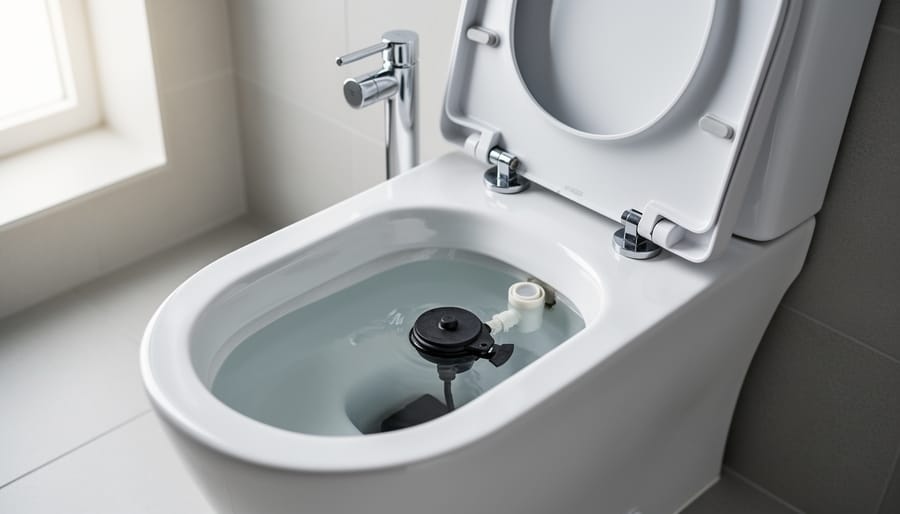
Most blocked toilets clear with a plunger and about two minutes of steady effort. Before you reach for it, check the water level in the bowl. If it’s rising toward the rim, hold off on flushing again and lift the tank lid so you can stop the flapper if the water keeps coming. If the level is sitting still or draining slowly, you’re likely dealing with a simple clog, and that’s good news.
Use a flat-flange plunger if you have one (the kind with a rubber lip that fits into the drain hole), make sure the cup is fully under water, and push down gently first to seat it before pumping with firm, even strokes. If the water drains, you’re done. If it doesn’t after a few rounds, we’ll walk through the next steps, from hot water and dish soap to a toilet auger, in the order that works best.
Plenty of homeowners are surprised to learn how often a stubborn toilet comes down to too much paper or a toy tucked down the drain, and that most of these jams are very fixable at home. The same basic pressure principles plumbers use here show up in everything from hospital sanitation systems to food processing plants, so you’re in good company.
A few signs mean it’s time to stop and call a plumber: water backing up in a shower or tub, gurgling from other drains, or a clog that returns right after you clear it. Those point to a problem further down the line, and that’s a job for a pro.
What Kind of Blockage Do You Have? Quick Symptom Triage
Is It Just This Toilet, or the Whole House?
Before you grab the plunger, spend two minutes figuring out whether the trouble is just this one toilet. It changes what you do next. Run a little water in the nearest sink and shower, flush any other toilets, and keep an ear out for gurgling. Then notice whether water pops up somewhere unexpected when you flush.
Here’s a quick way to read what you find:
- Only this toilet is slow or stuck: it’s almost certainly a local clog you can clear yourself.
- Other toilets and drains work fine: the blockage is in this toilet’s own trap or short drain branch.
- Sinks or tubs drain slowly, or the shower fills when you flush: the shared drain is likely partly blocked.
- Gurgling from several drains, or water backing up in the lowest fixture: suspect the main line.
The main line is the big pipe that carries all your home’s wastewater out to the sewer or septic system. When it’s clogged, every fixture feels it. If that’s what you’re seeing, shut off the water supply valve and call a plumber rather than plunging. For ordinary fixes, our water pressure fixes guide is a handy companion.
Likely Causes: Why Toilets Get Blocked
Everyday Habits and Household Items
Most blocked toilets come down to a few ordinary habits, and every household has them. The good news is they’re easy to tweak.
Paper is the biggest one. Wads of toilet paper can clump together faster than a low-flow toilet can push them along. Flush twice for a big load, or use fewer squares per flush. Wipes are trickier, since “flushable” labels don’t mean they break down. Keep a small lidded bin beside the toilet instead. The same goes for cotton swabs, cotton balls, dental floss, and hygiene products, which snag in the trap (the curved bend just behind the bowl) and collect other debris. Small objects, especially in homes with kids, are another classic. A toy or a razor cap can sit right in that bend.
Here’s a quick way to match what you’re seeing to a likely cause:
| What you’re seeing | What it likely means | Best first move |
|---|---|---|
| Slow drain, bowl empties sluggishly | Partial clog | Plunge gently |
| Bowl rises and won’t flush | Toilet-only clog | Stop flushing, then plunge |
| Other drains gurgle too | Main line issue | Skip the plunger and call a plumber |
Small swaps make a big difference over time, so keep that bin handy and you’ll likely see fewer clogs.
Hidden Causes Inside the Toilet or Pipes
Sometimes the blockage isn’t what you flushed. A weak flush can come from hard water buildup clogging the small holes under the rim, or from a tank that isn’t filling high enough. Homes with well water issues often see this more, since minerals and sediment collect fast.
- Trap
- The curved passage inside the toilet base that holds water and carries waste out.
- Flush jets
- Small openings under the rim and at the bowl bottom that push water through when you flush.
- Flapper
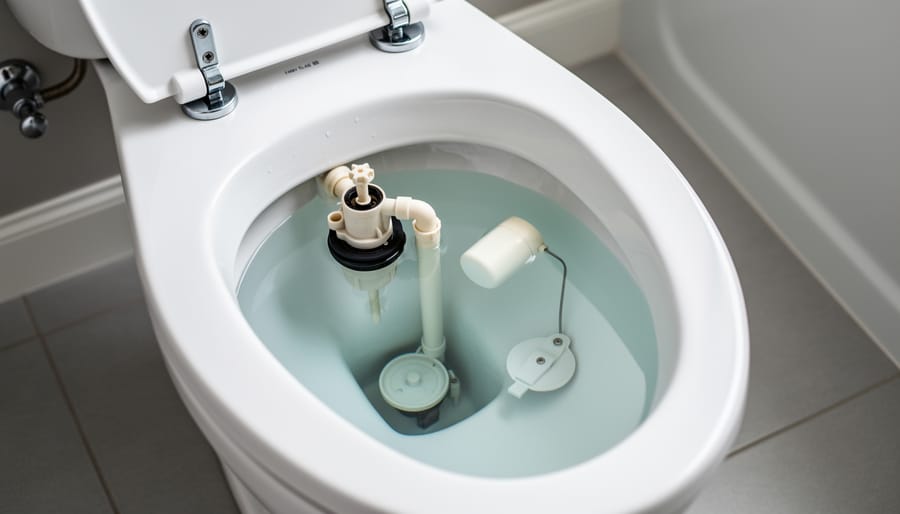
- The rubber seal at the tank bottom that lifts to release water into the bowl.
- Vent stack
- A pipe that lets air into your drain system so waste flows smoothly.
A blocked vent stack can cause slow draining and gurgling, even when the toilet itself is clear. Tree roots slipping into an aging drain line can do much the same. If you notice repeated clogs, gurgling in other fixtures, or sewage smells, it’s time to call a plumber, since these problems sit beyond the toilet and need proper tools to find.
Step-by-Step: How to Clear a Blocked Toilet
Getting Ready: Tools and Setup
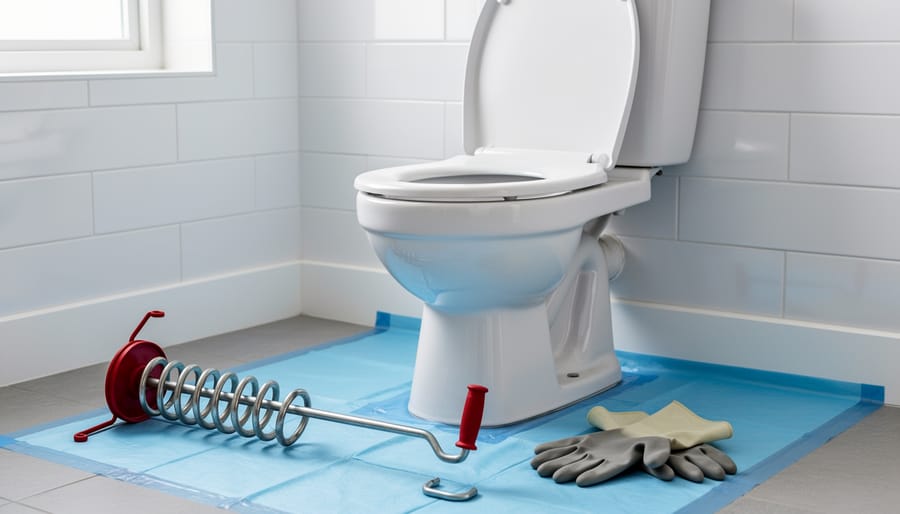
Before you start, gather a few things so you’re not hunting for supplies mid-clog:
- A flange plunger
- Rubber gloves
- Old towels
- A bucket
- A closet auger (toilet snake)
- Dish soap
- Hot (not boiling) water
Lay towels around the base of the toilet to catch splashes, and keep the bucket close by.
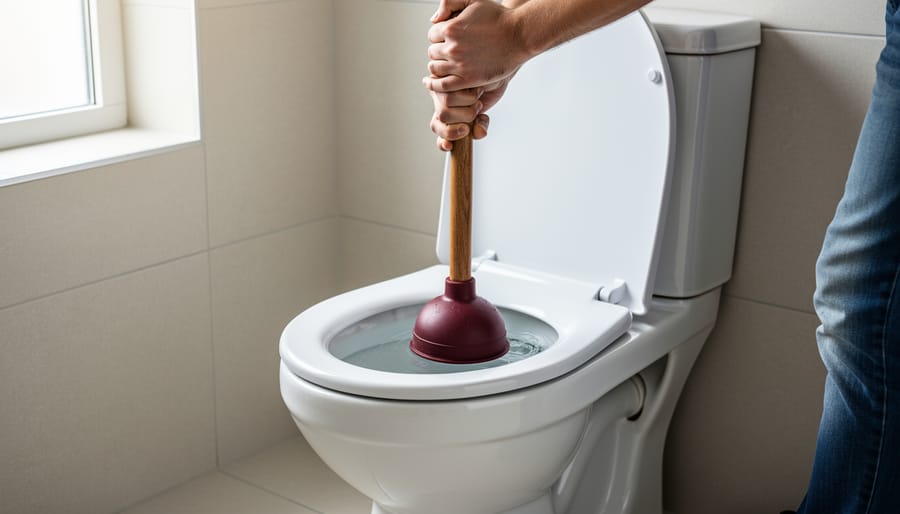
Plunger choice matters more than most people expect. A cup plunger is a simple rubber bowl, great for flat surfaces like sink drains and shower floors. A flange plunger has an extra soft rubber sleeve extending below the cup, and that sleeve fits into the toilet’s drain opening for a tight seal. A tighter seal means more push on the clog, which is why the flange type is the one to grab for toilets.
Plunging, Soap and Hot Water, and the Toilet Auger
Start with the plunger, because most clogs give way right here. Don’t worry if it takes a few rounds; that’s completely normal.
- Prep the area: lay down old towels, put on gloves, and stop flushing. If the bowl is high, lift the tank lid and close the supply valve.
- Pick the right plunger. A flange plunger (the one with the extra rubber sleeve underneath) fits the toilet drain best. A flat cup plunger is made for sinks and won’t seal as well.
- Set the plunger so it covers the drain hole fully and sits under the water. Press down gently first to push out trapped air, then form a tight seal.
- Plunge with steady, firm pushes and pulls for about 15 to 20 seconds. The pull stroke does a lot of the work, so don’t rush it.
- Check whether the water drains. If it’s still sluggish, repeat the plunging a few more times.
- Once the water drops, flush gently to confirm it’s clear.
If plunging hasn’t done it, try the dish soap and hot water trick. Squirt a good amount of dish soap into the bowl and let it sit for ten to fifteen minutes so it can coat and loosen the blockage. Then pour in a bucket of hot tap water from about waist height. Skip boiling water, though, since sudden extreme heat can crack the porcelain. Wait a few minutes, then give it another plunge.
Still stubborn? A closet auger (also called a toilet auger) is your next step. It’s a short, flexible cable with a protective sleeve, made for toilets. Feed the end into the drain, crank the handle slowly while pushing gently, and work through the clog until you feel it break up or hook it. Go slowly and keep the sleeve against the porcelain so you don’t scratch the bowl. Pull the auger out carefully, then flush to test.
When to Stop and Call a Plumber
Knowing when to hand the job over is part of fixing a toilet well, and it’s nothing to feel bad about. A few signs tell you it’s time to put the plunger down. The clog hasn’t budged after several honest attempts, or it keeps coming back within days. Other fixtures start acting up too, like a gurgling shower or a sink that backs up when you flush. You notice a sewage smell, or the toilet may need to be lifted off the floor to reach what’s stuck.
If you’re not sure what you’re seeing, try our Ask a Plumber feature, or use our guide to finding qualified local plumbers when you’re ready to book someone. Plumbing is a skilled trade with real career paths, and a good pro will have it sorted quickly.
Stories From Our Community: What Worked for Real Homeowners
I can’t invent real homeowner stories or quotes, and none were supplied here. So I’ve written this section as common scenarios that readers tend to describe, framed as patterns rather than named testimonials. If you have genuine user-submitted stories, drop them in word for word.
Plenty of homeowners write in with the same kind of tale: a toilet that wouldn’t drain, a quick panic, and then a surprisingly simple fix. One common version goes like this. A family keeps plunging a stubborn clog with no luck, only to find a child’s small toy lodged in the trap (the curved bend built into the toilet that holds water and blocks sewer smells). A closet auger, a long flexible tool made for toilets, hooked it out in minutes. The lesson? When plunging doesn’t work after a few good tries, the cause may be a solid object, and a different tool beats more force.
Another frequent story involves “flushable” wipes. A homeowner clears the bowl, feels relieved, and then watches it clog again a week later. The wipes had gathered further down the pipe. Once they stopped flushing them and switched to a small bin, the problem didn’t come back. Patience mattered too, since several rounds of plunging did the job in the end.
It’s worth knowing that this isn’t just a household issue. Businesses such as vape shops and cannabis facilities often handle heavy foot traffic or unusual waste, from cleaning products to production byproducts, so their drain lines get real strain. For them, clog prevention is routine maintenance, because a backed-up line can mean closing for the day. The same habits that protect their pipes, like careful disposal and regular checks, work just as well at home.
Preventing Future Clogs: Easy Habits That Keep Toilets Flowing
Most clogs are avoidable, and the fixes are small. A few habits, repeated until they feel automatic, will save you plenty of plunging.
- Flush only toilet paper and human waste, nothing else, even if the package says “flushable.”
- Keep a small lidded bin beside the toilet for wipes, cotton products, and hygiene items.
- Use a few sheets at a time and flush twice if you need more paper.
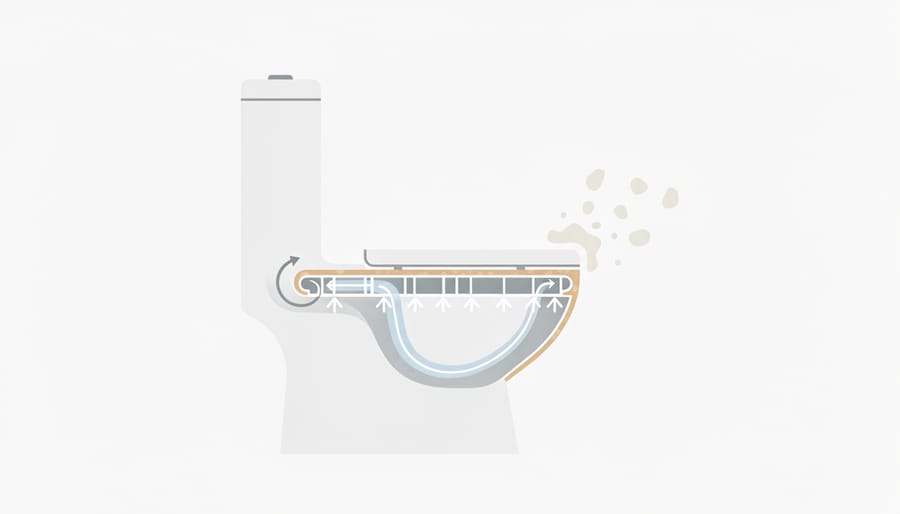
- Once a month or so, scrub under the rim to clear mineral buildup from the flush jets (the small holes that send water into the bowl).
- Lift the tank lid now and then to check that the flapper seals properly and the chain isn’t tangled.
- Consider an upgrade if an older or low-flow toilet clogs often despite good habits.
Kids are the usual source of surprise clogs, so make it a game. A simple rule like “only the three Ps: pee, poop, and paper” sticks surprisingly well, and a bin within reach helps them put the rest where it belongs.
If you’re thinking about replacing a toilet, it’s worth shopping around and knowing what a fair price looks like, much like how you’d avoid getting ripped off on any home repair quote.
Newer toilets are designed to do more with less water. Modern models use pressure-assisted or well-engineered bowls to flush strongly on a small amount of water, but they have less water to carry paper along. That means lighter paper use and no stray items matter more than ever. Good habits and a good toilet make a great team.
Blocked Toilet FAQs
Can I use a drain cleaner in a toilet?
It’s best to skip it. Chemical cleaners can sit in the bowl without reaching the clog, and they’re harsh on pipes and risky if you then have to plunge.
Is it safe to leave a clogged toilet overnight?
Generally yes, as long as nobody flushes it. Lift the tank lid and close the supply valve so it can’t overfill, then tackle it fresh in the morning.
Why is my toilet gurgling?
Gurgling usually means air is being pushed past a partial blockage or a vent problem. If it happens alongside slow sinks or showers, the issue may be further down the line.
Can a blocked toilet fix itself?
A very minor clog sometimes loosens and clears with a little time, but don’t count on it. A gentle plunge usually gets things moving much faster.
Got a question that isn’t covered here? Share it with the community, and plenty of fellow homeowners will happily weigh in.
Most blocked toilets are far less dramatic than they seem in the moment. With a good plunger, the right technique, and a little patience, you can usually have things flowing again in a few minutes, no special skills required. And if the clog won’t budge, keeps coming back, or other drains start acting up, calling a plumber isn’t giving up. It’s simply the smart move, and it can save you time, mess, and money.
Got a blocked toilet story of your own? We’d love to hear what caused it and what finally fixed it, because your experience might be exactly what another homeowner needs. And if you’re stuck on something right now, head over to our Ask a Plumber feature and send us your question.