

BPC-157, short for Body Protection Compound 157, is a small chain of amino acids (a peptide) first identified in human gastric juice and studied mostly in lab animals. The “Wolverine Stack” is a nickname for pairing it with a second peptide, TB-500, a synthetic fragment of a protein called thymosin beta-4. Products sold under that label, like the one listed at kylopeptides.com/product/wolverine-stackare typically marketed for research use. The name borrows from the comic book hero famous for healing fast.
Here’s the honest picture. Most of the evidence so far comes from rodent and cell studies, and large, well-controlled human trials are still missing. That means the buzz online runs well ahead of what the science can confirm today. This article sticks to background: what these compounds are, where the nickname came from, and what researchers have and haven’t shown. It offers no medical claims and no dosing advice.
Now, why does a plumbing site care? Because behind every lab, wellness clinic, vape production space, and cannabis-adjacent facility sits a quiet network of pipes. Clean water, filtered supply lines, safe drainage, and steady temperature control all keep sensitive work running. People new to this world often ask about the science first and the infrastructure second, so we’ll cover both in plain, friendly language.
What Is BPC-157, in Plain English?
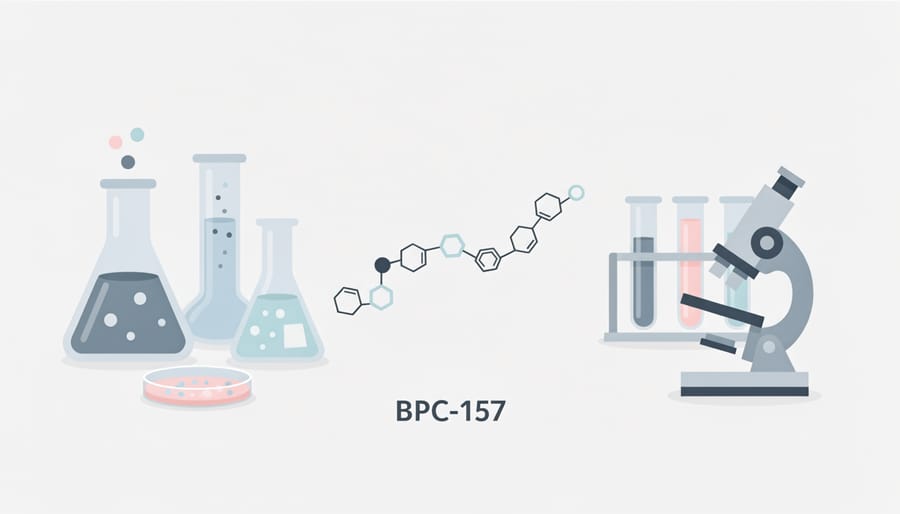
BPC-157 can sound intimidating, but the idea behind it is pretty simple. The “BPC” stands for “Body Protection Compound,” and the “157” is a numbering label researchers used for this particular version. It’s a peptide, which just means a short chain of amino acids. If proteins are long strings of building blocks, a peptide is a much shorter string, think of a few links of chain rather than a whole fence.
BPC-157 is made of 15 amino acids, and it was originally modeled on a piece of a larger protein found in human stomach fluid (gastric juice). Because that protein shows up in the gut, early lab researchers got curious about whether this fragment might play a role in protecting and repairing tissue. Most of that early work focused on the digestive tract and on how tissues heal, which is how the “body protection” name stuck. It’s a descriptive label, not a proven claim.
Here are a few terms you’ll keep running into as you read more:
- Amino acid
- One of the small building blocks the body uses to make proteins. Linking them together in different orders creates different molecules.
- Peptide
- A short chain of amino acids, shorter than a full protein.
- Preclinical study
- Research done in cells or animals before any testing in people. Most BPC-157 studies fall into this category.
- Research chemical
- A substance sold for laboratory study rather than as an approved medication for people.
- Stack
- Internet shorthand for using more than one compound together, which is where the “Wolverine Stack” nickname comes from.
Keep that glossary handy, because those words come up constantly in online conversations about this topic. Knowing what they mean makes it much easier to tell careful reporting from hype, and that’s really the goal of this whole background read.
Where the ‘Wolverine Stack’ Name Comes From
If you’ve spent any time in online wellness or biohacking forums, you’ve probably seen “Wolverine Stack” tossed around. It sounds dramatic, but the idea behind it is pretty simple.
The name is a nod to Wolverine, the comic-book character famous for healing from nearly any injury at lightning speed. Forum members started using the nickname as shorthand for a pairing of compounds they associated with recovery and tissue repair. It’s a catchy label, and catchy labels spread fast.
So what’s a “stack”? In these communities, a stack just means combining more than one compound, with the idea that two things used together might do something different than either one alone. Think of it like a toolbox: some jobs call for a single wrench, and people in these circles like to talk about carrying two or three. Whether a given combination actually works as claimed is a separate question, and we’ll get to the evidence shortly.
In the Wolverine Stack conversation, BPC-157 is usually paired with another peptide called TB-500. TB-500 is a synthetic fragment related to thymosin beta-4, a protein that occurs naturally in the body. People bring the two up together mostly because both attracted early interest in connection with tissue repair, and the pairing took on a life of its own online.
Here’s the important part: “Wolverine Stack” is internet slang. It isn’t a scientific term, a medical protocol, or anything you’d find defined in a clinical guideline. It’s a community nickname, nothing more official than that. Knowing where the name came from helps you read the conversations around it with a clearer, more curious head, and keeps the playful branding from sounding more authoritative than it is.
What the Research Actually Shows

Why Animal Studies Aren’t the Whole Story
Think about a repair that works perfectly on a test pipe in the shop. The fittings are clean, the water pressure is steady, and nothing else is going on. Then you try the same fix inside a real house, with old pipes, odd angles, and mineral buildup, and it behaves differently. Lab animal studies work much the same way. They’re a controlled test bench, which is useful, but a person is a far more complicated “house.”
Bodies differ in size, metabolism, and how they process compounds, so a result in a rat doesn’t automatically carry over to us. That’s why researchers treat each type of evidence as one piece of a bigger picture:
| Type of evidence | What it can tell us | Main limitation |
|---|---|---|
| Cell studies | How a compound behaves in isolated cells | Cells in a dish aren’t a whole living body |
| Animal studies | Early signals about effects and safety in a living system | Results may not apply to people |
| Small human reports | Hints about how people respond | Few participants, often no control group |
| Large clinical trials | Reliable evidence on safety and effectiveness | Costly and slow, so rarely done early on |
None of this means early research is worthless. It simply means it’s a starting point, not a finish line.

What Researchers Are Still Trying to Answer
Even with all the buzz, there’s still a lot scientists haven’t figured out about BPC-157. Think of it like a house with a mystery leak: you know something’s going on, but tracing the source takes patient, careful work.
Here are some of the biggest open questions:
Dosing. Nobody has established what amount, if any, would be appropriate for people. Numbers floating around online come mostly from animal studies or anecdotes, not from rigorous human trials.
Long-term effects. Most studies are short. We simply don’t know what happens after months or years of exposure.
Quality control. Compounds sold as “research chemicals” aren’t held to the same standards as approved medications, so what’s in the vial may not match the label.
Study design. Good human research needs proper control groups, enough participants, and clear safety monitoring.
If you want to dig deeper, look for peer-reviewed journals and databases like PubMed, and be cautious with forum posts or sellers’ marketing pages.
Legal and Regulatory Background
If you’ve been reading about BPC-157 online, you’ve probably noticed that the rules around it can feel a little fuzzy. That’s normal, and there’s no need to worry. Here’s the general picture.
In many places, BPC-157 is sold as a “research chemical,” meaning it’s labeled for laboratory use rather than as something people take for health reasons. It also isn’t approved as a medication in many jurisdictions, which is a big part of why the human evidence we talked about earlier is so thin. Competitive sports are another area to know about. Many athletic organizations list BPC-157 among prohibited substances, so athletes subject to testing are generally told to steer clear.
Here’s the important part: rules vary by country, province, and state, and they change over time. Something that was true when this was written may not be true by the time you read it. The most reliable move is to check current guidance from your national health regulator or sports authority, rather than relying on any single article, including this one.
Regulation also shapes the spaces where this work happens. Facilities that handle research compounds often need dedicated, well-maintained water systems. A properly installed whole-house water filter can help keep general supply clean, while reverse osmosis is a common choice when a space needs more thoroughly purified water. And routine checking plumbing leaks is a simple habit that keeps any workspace safer and drier.
Why This Matters to Labs and Facilities (Yes, Plumbing Too)
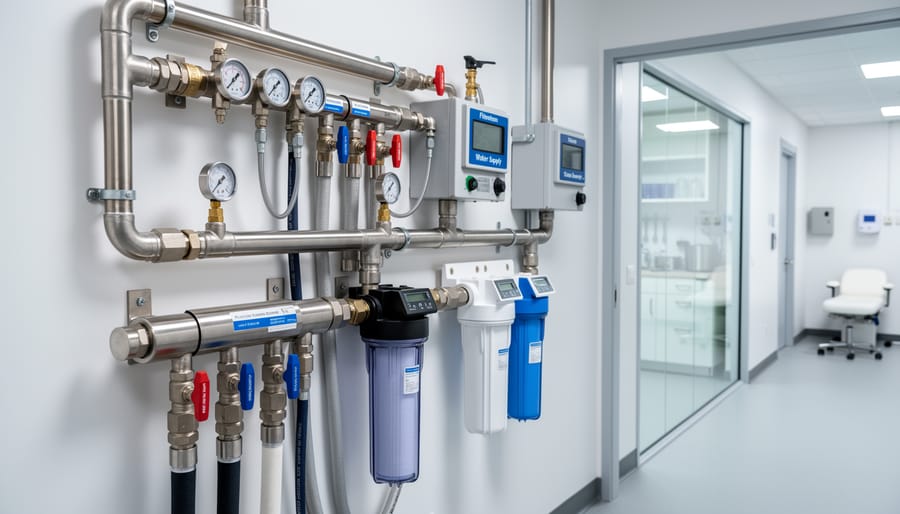
Here’s the thing most people don’t realize: any space that handles specialty compounds, whether that’s a small research lab, a compounding setup, a wellness clinic, or a vaping or cannabis-adjacent facility, runs on plumbing. Nobody sees it, but it matters more in these spaces than almost anywhere else.
Think about what these facilities actually need. Clean, consistent water for mixing and rinsing. Purified or filtered lines so impurities don’t end up where they shouldn’t. Drains that handle chemical-rinse water properly. Safe waste handling so nothing questionable heads straight into the sewer. And backflow prevention, which is the safeguard that stops used water from creeping back into the clean supply. That last one is a big deal. It protects the workspace and the whole building.
Filtration is often the first upgrade these spaces make. If you’re curious how that works at home scale, our guides on how to install water filters and set up an under sink filter are a friendly starting point. The same basic ideas scale up to bigger systems, just with more planning.
Here’s a story a plumber in our community shared with us. He was brought in to help build out a small wellness and testing space in a converted storefront. The owners were focused on equipment and layout, and plumbing was an afterthought. He suggested adding a dedicated filtered line to the prep sink and a proper backflow device on the supply. At first they thought it was overkill. Months later, after a municipal water-main flush stirred up sediment across the block, the owner called to say the filter had caught it all, and their work hadn’t missed a beat. “I didn’t think about my pipes once, and that’s exactly the point,” he told the plumber.
That’s what good plumbing looks like in any specialty facility: quiet, dependable, and invisible.
Have you worked on or inside a lab, clinic, or other specialty space? We’d love to hear your story. Share it with us, because real experiences like yours help everyone in our community learn.
Common Questions Researchers and Curious Readers Ask
Curious questions come up a lot with this topic, so here are quick, plain-language answers to the ones we hear most. Think of them as starting points for your own reading, not as advice for any individual.
What does BPC-157 stand for?
It stands for “Body Protection Compound 157.” The number simply refers to its place in the original lab naming, and it’s a short chain of amino acids called a peptide.
Is the “Wolverine Stack” an official protocol?
No. It’s an internet nickname borrowed from the comic-book character’s healing ability, not a scientific or medical term, and there’s no recognized standard behind it.
Why is there so little human data?
Most published work so far comes from animal and cell studies, and well-designed human trials are expensive and slow to run. Until more of them exist, it’s wise to treat online claims as early-stage ideas rather than settled facts.
How can I tell if a source is reliable?
Look for named authors, clear methods, and publication in a peer-reviewed journal. Be cautious with sellers, forum posts, and anything promising dramatic results without showing its evidence.
So where can you find trustworthy research? Public databases of published studies, such as PubMed, let you search by compound name and read the original abstracts yourself. Start with review articles, which summarize many studies at once, and notice how often the authors say more research is needed. That honesty is a good sign.
And if you’re thinking about any health decision, a qualified healthcare professional is the right person to talk to. They can look at your full picture in a way no article can, and there’s never anything wrong with asking questions before you act.
So, here’s the short version. BPC-157 is a small peptide, a chain of amino acids, that researchers first explored for tissue repair and gut protection. The “Wolverine Stack” is internet slang, not a medical term, usually pairing it with TB-500. Most of the evidence comes from animal and cell studies, and good human data is still thin.
That’s okay. Being curious is a good thing, and so is checking your sources and favoring peer-reviewed research.
Have a story from a lab, wellness space, or specialty facility? Share it with us, or use “Ask a Plumber” to plan a water-dependent workspace.