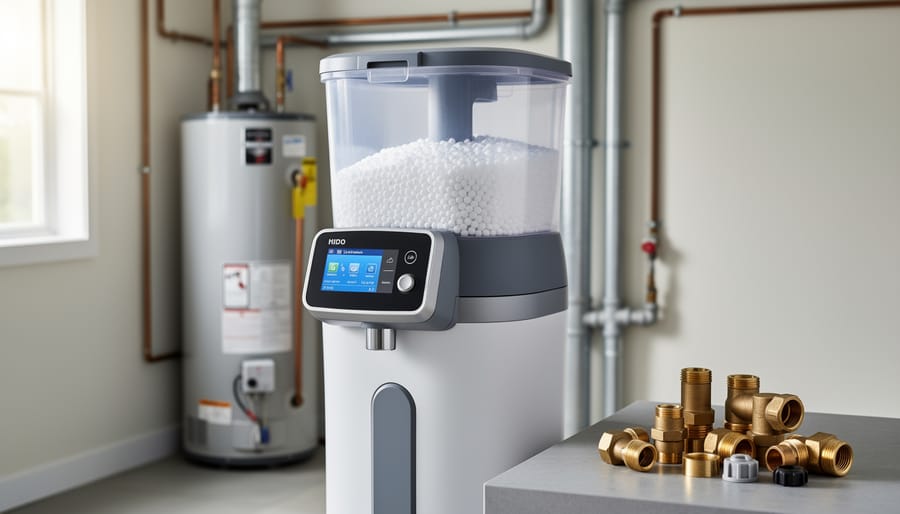
If you’re dealing with soap scum that won’t rinse off, spotty dishes straight from the dishwasher, or a water heater that’s aging faster than it should, hard water is likely the culprit. A water softener removes calcium and magnesium minerals from your home’s water supply through ion exchange, preventing scale buildup in pipes and appliances while making everyday tasks like cleaning and bathing noticeably easier.
Choosing the right water softener for your home depends on three main factors: your water hardness level (measured in grains per gallon), household size, and daily water consumption. Most families find that a salt-based ion exchange system works best, though salt-free conditioners and dual-tank models serve specific needs. Getting the sizing wrong is the most common mistake homeowners make, and it leads to either insufficient softening or wasted salt and water during regeneration cycles.
Sarah, a homeowner in Phoenix, told us she’d been scrubbing mineral stains off her shower glass for years before installing a softener. Within two weeks, the spots stopped forming entirely, and her skin felt less dry after showering. Her story reflects what many homeowners discover: soft water affects far more than just your plumbing. It reduces detergent use by up to 50%, extends appliance lifespan by years, and even impacts your monthly utility bills.
This guide walks you through the buying factors that matter most, compares the main types of softeners available in 2026, and helps you avoid the installation and maintenance pitfalls that catch first-time buyers off guard.
What Hard Water Does to Your Home (And Why You Should Care)
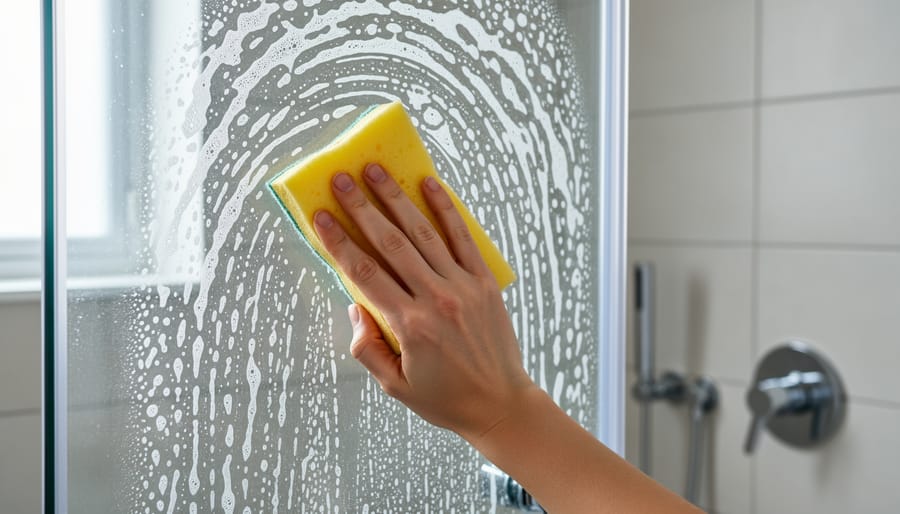
Hard water might sound like a minor annoyance, but left unchecked it can quietly wreak havoc throughout your home. The excess calcium and magnesium in hard water leave behind mineral deposits that build up over time, affecting everything from your morning shower to your monthly energy bills.
Sarah, a homeowner in Arizona, didn’t realize she had hard water until her three-year-old dishwasher stopped draining properly. When the repair technician opened it up, he found thick white scale coating the heating element and clogging the spray arms. “He told me I’d need a new dishwasher soon if I didn’t address the water quality,” she recalls. Her story isn’t unique.
Here are the telltale signs that hard water is already affecting your home:
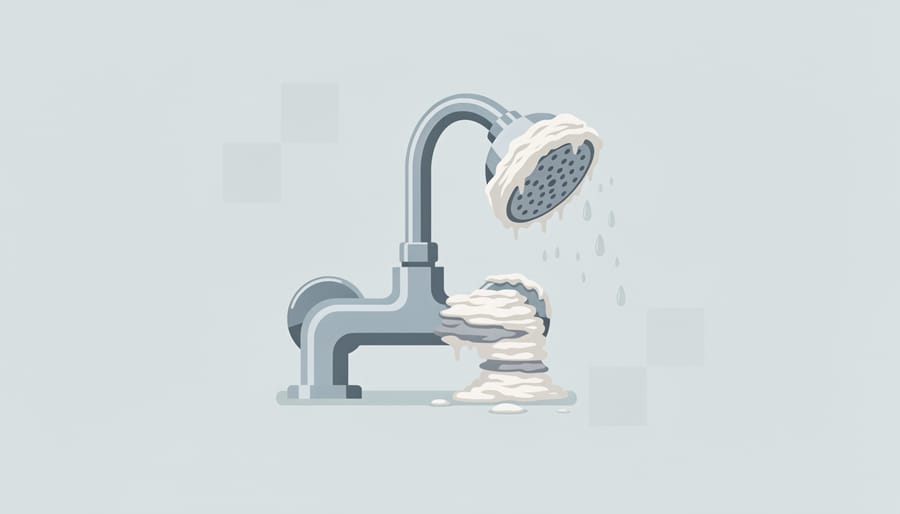
- White, crusty buildup around faucets, showerheads, and appliance connections
- Stubborn soap scum on shower doors and bathtubs that won’t wipe clean
- Dry, itchy skin and dull hair even after showering
- Dishes and glassware that come out of the dishwasher spotted or cloudy
- Clothes that feel stiff or look dingy after washing
- Water heaters, washing machines, and dishwashers that fail earlier than expected
- Reduced water pressure as pipes narrow from scale accumulation
The real cost adds up fast. Water heaters work harder and use more energy when scale coats the heating elements. Appliances wear out years sooner than they should. You use more soap, detergent, and cleaning products because they don’t lather or rinse properly in hard water. Many homeowners spend hundreds extra per year without connecting the dots to their water quality.
Understanding hard water’s impact is the first step in your household water filtration plumbing journey. A water softener addresses the root cause, protecting your investment in appliances and plumbing while making daily tasks easier and more pleasant.
What to Look for When Buying a Water Softener
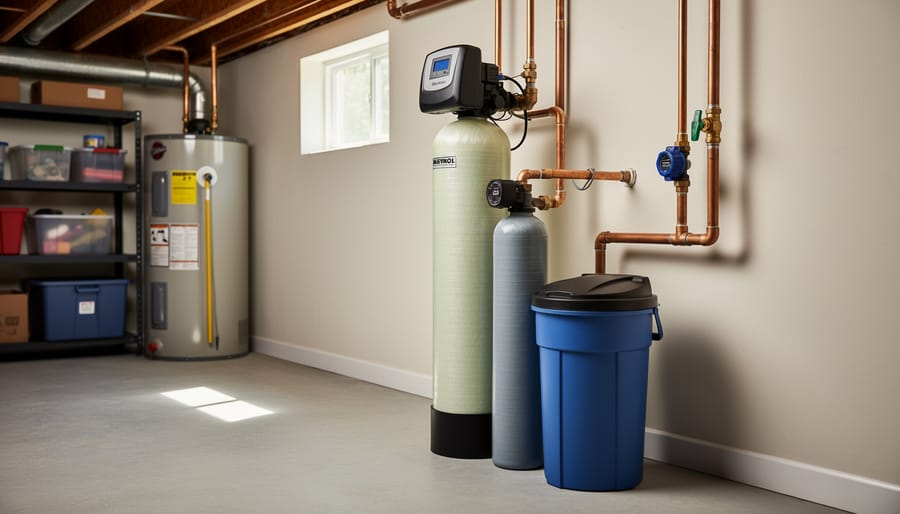
Choosing a water softener isn’t just about picking the cheapest model and calling it a day. You need one that matches your household’s actual water usage, fits your available space, and won’t break the bank on ongoing costs. Here’s what matters most.
Capacity and Grain Rating
The grain capacity tells you how much hardness the softener can remove before it needs to regenerate (refresh itself). If your water measures 10 grains per gallon of hardness and your family uses 300 gallons daily, you’re adding 3,000 grains of hardness to your system each day. A 32,000-grain softener would handle about 10 days before needing regeneration, while a 48,000-grain unit stretches that further. Most families do well with capacities between 32,000 and 48,000 grains. Bigger isn’t always better, an oversized unit regenerates less often, which can let water sit too long and develop bacteria.
Regeneration Type
Water softeners regenerate on either a timer or on-demand basis. Timer-based models flush themselves on a set schedule, whether they need it or not, wasting salt and water. Demand-initiated or metered systems track actual water use and regenerate only when capacity runs low. They’re more efficient and save you money over time. If you have unpredictable water usage, house guests, teenagers with long showers, metered regeneration adapts automatically.
Salt-Based vs. Salt-Free
Traditional salt-based softeners actually remove hardness minerals through ion exchange. Salt-free conditioners don’t soften water; they crystallize minerals so they’re less likely to stick to pipes, but you’ll still see spots on dishes and feel the same water texture. True softening requires salt. If sodium intake is a concern, you can install a reverse-osmosis filter at your kitchen tap for drinking water while the rest of the house benefits from softened water.
Size and Installation Space
Softeners need room for the resin tank, brine tank (where salt sits), and clearance for salt loading. Measure your available space, basements and garages work great, but utility closets can get tight. Some compact models stack tanks vertically or use slimmer profiles. You’ll also need a drain line within reasonable distance and an electrical outlet for metered units.
Flow Rate
Flow rate, measured in gallons per minute, determines whether your softener can keep up during peak usage. If three people shower simultaneously while the dishwasher runs, you need adequate flow. Most household softeners handle 10-15 GPM comfortably. Undersized flow creates pressure drops and sluggish water delivery.
Certifications and Warranty
Look for NSF/ANSI Standard 44 certification, which confirms the unit actually reduces hardness as claimed. A solid warranty covers at least five years on tanks and electronics. Budget models with 90-day warranties signal potential headaches. Read what’s excluded, some warranties don’t cover resin bed replacement, which eventually wears out.
Ongoing Costs
Calculate what you’ll spend yearly on salt, water for regeneration, and electricity. A family using a metered softener might spend $50-100 annually on salt. Factor in periodic maintenance like resin cleaning or replacement every 10-15 years. The cheapest softener upfront can cost more long-term if it guzzles salt or needs frequent repairs.
Types of Water Softeners Compared
The good news is that you have options when it comes to water softeners, and each type solves hard water problems in its own way. Let’s walk through the four main types you’ll encounter, what makes each one tick, and which households they serve best.
Salt-based ion exchange systems are what most people think of when they hear “water softener,” and for good reason, they’re the only type that truly removes hardness minerals from your water. These systems use resin beads to swap calcium and magnesium ions for sodium ions as water flows through. The result is genuinely soft water that lathers easily, rinses clean, and protects your pipes and appliances. They’re ideal for moderate to severe hard water, especially if you notice significant scale buildup or soap scum. The tradeoff is that you’ll need to refill the salt regularly (usually monthly) and deal with a bit of wastewater during regeneration cycles. Budget anywhere from $400 to $2,500 depending on capacity and features.
Salt-free conditioners take a different approach entirely. Instead of removing minerals, they alter their structure so they’re less likely to stick to surfaces and form scale. These systems appeal to homeowners who want to reduce scale without adding sodium to their water or dealing with salt refills. However, it’s important to understand that salt-free systems don’t remove minerals you won’t get the same soft-water feel for bathing or laundry, and they’re less effective on very hard water. They work best for mild to moderate hardness when your main goal is protecting appliances rather than achieving that soft-water experience.
| Type | How It Works (Simple) | Best For | Maintenance Level | Approximate Cost Range |
|---|---|---|---|---|
| Salt-Based Ion Exchange | Swaps hardness minerals for sodium | Moderate to severe hard water; full softening needed | Medium (monthly salt refills) | $400, $2,500 |
| Salt-Free Conditioner | Crystallizes minerals to prevent scale | Mild hardness; sodium-free preference | Low (annual filter change) | $300, $2,000 |
| Dual-Tank System | Two tanks alternate for continuous softening | Large households; high water demand | Medium (same as salt-based) | $1,000, $3,500 |
| Magnetic/Electronic | Claims to alter minerals with magnetic fields | Very mild issues; experimental interest | Very low (plug-in only) | $50, $500 |
Dual-tank systems are essentially two salt-based softeners working in tandem. While one tank regenerates, the other keeps softening your water, so you never run out of soft water even during peak usage times. If you have a large family, run multiple appliances simultaneously, or simply can’t tolerate any interruption in soft water supply, a dual-tank setup makes sense. The cost is higher and you’ll need more installation space, but continuous operation is a genuine advantage for busy households.
Magnetic and electronic descalers are the wild cards. These devices claim to prevent scale using magnetic or electromagnetic fields, and they’re appealingly simple, just clamp or wrap them around your pipe, plug in if needed, and you’re done. The catch is that scientific evidence supporting their effectiveness remains thin and inconsistent. Some homeowners swear by them for minor hard water issues, others see no difference. They’re inexpensive and easy to try, but manage your expectations and consider them experimental rather than proven solutions.
Sizing Your Water Softener: Getting the Capacity Right
Getting the size right sounds intimidating, but it comes down to three numbers: how hard your water is, how much water your household uses daily, and how many grains of hardness your softener needs to remove before it regenerates.
Start by testing your water hardness. You can buy an inexpensive test kit online or at a hardware store, request a free test from most water softener dealers, or check your local water utility’s annual quality report if you’re on city water. Hardness is measured in grains per gallon (gpg), anything above 7 gpg is considered hard, and many homes deal with 10-15 gpg or higher.
Next, estimate your daily water usage. The average person uses about 75 gallons per day, so multiply 75 by the number of people in your home. A family of four would use roughly 300 gallons daily. If you have teenagers, run multiple loads of laundry, or water a garden, bump that estimate up by 20-30%.
Now for the simple formula: multiply your daily water usage by your hardness level. A four-person household using 300 gallons per day with 10 gpg hardness needs a softener that can handle 3,000 grains per day (300 × 10 = 3,000). Most softeners regenerate every few days, so multiply that daily number by the days between regenerations, typically 3 to 7 days depending on the system. For three-day cycles, you’d need 9,000 grains minimum (3,000 × 3).
In practice, add a 20-25% buffer for guests, seasonal changes, and equipment longevity. That same family would be well-served by a 12,000-grain or 16,000-grain unit rather than the bare minimum. Real example: Sarah in Phoenix has extremely hard water at 18 gpg, three people at home, and estimated 250 gallons daily, her calculation pointed to 13,500 grains (250 × 18 × 3), so she chose a 16,000-grain system and hasn’t worried about it since.
Our Recommendations for Different Households
Every household is different, and the water softener that works beautifully for your neighbor might be overkill or underpowered for you. Here’s how to match a system to your specific living situation.
Small apartments and condos present unique challenges since space is precious and installation options may be limited by landlord restrictions or plumbing access. If you’re renting, a portable exchange tank service or a compact countertop or under-sink conditioning system makes the most sense, you won’t need landlord permission for major plumbing work, and you can take it with you when you move. If you own your unit, consider a compact salt-based softener rated around 16,000-24,000 grains. Look for models with slim profiles designed for tight utility closets or under-counter installation. Regeneration should be metered rather than timed to conserve water and salt in smaller households.
Average family homes with three to four people typically do well with a 32,000 to 48,000 grain capacity system. This handles daily showers, laundry, dishwashing, and cooking without frequent regeneration cycles. A standard salt-based ion exchange softener offers the best balance of effectiveness and cost for most families. Choose metered regeneration to match your actual usage patterns, and consider a model with a larger brine tank if you’d rather refill salt less often. If anyone in your household is concerned about sodium in drinking water, budget for a reverse osmosis system at the kitchen tap or a bypass valve for one cold-water line.
Large households or homes with high water usage need systems rated 48,000 grains or higher, or consider a dual-tank setup that ensures you never run out of soft water during regeneration. Dual-tank systems cost more upfront but eliminate the hard water window that occurs when single-tank units regenerate. If you have multiple bathrooms running simultaneously, verify the system’s flow rate can handle peak demand, typically at least 10-12 gallons per minute for larger homes.
Here’s a quick reference to help you narrow your focus:
- Small apartments/condos: 16,000-24,000 grain compact unit or portable exchange service
- Average family homes: 32,000-48,000 grain salt-based system with metered regeneration
- Large households: 48,000+ grain capacity or dual-tank system with high flow rate
- Well water users: Salt-based softener with pre-filter for sediment and iron removal
- City water users: Standard softener, possibly with chlorine pre-filter if taste is a concern
- Budget-conscious buyers: Reliable mid-capacity salt-based unit with strong warranty
- Eco-friendly priorities: Salt-free conditioner or high-efficiency softener with smart regeneration
Well water versus city water makes a real difference in what you need. Well water often contains iron, manganese, sediment, and other minerals beyond calcium and magnesium. You’ll want a salt-based softener paired with a sediment pre-filter, and possibly an iron filter if your water leaves rust stains. City water users generally have fewer complications, though chlorine and chloramines in municipal supplies can affect the resin beads over time. A simple carbon pre-filter extends softener life and improves taste if chlorine is strong.
Budget-conscious buyers should focus on proven, mid-capacity salt-based systems from established brands rather than chasing the cheapest option. A 32,000 grain unit with a solid warranty will outlast and outperform a bargain model that breaks down in two years. Factor in long-term costs like salt, water for regeneration, and electricity. Metered regeneration saves money over time compared to timed systems that regenerate on a fixed schedule whether needed or not.
Eco-friendly households face a trade-off: salt-based softeners waste some water during regeneration and discharge salt into wastewater, while salt-free conditioners don’t actually remove hardness minerals. If true softening matters for your plumbing and appliances, choose a high-efficiency salt-based model with smart controls that minimize water and salt waste. If you can live with conditioned rather than softened water, a salt-free system avoids environmental impact altogether. Some families split the difference by softening only hot water to protect the water heater and appliances while leaving cold drinking water hard.
Common Mistakes to Avoid When Buying a Water Softener
The biggest mistake? Assuming water softeners and water purification systems are the same thing. Softeners remove minerals; they don’t filter out contaminants like bacteria, lead, or chlorine. If you’re on well water, you’ll likely need both a softener and a separate well water filtration setup to address safety and hardness.
Another common pitfall is buying based on price alone. That bargain unit might cost you more in the long run through excessive salt use, frequent repairs, or undersized capacity that can’t keep up with your household. Sarah from Burlington learned this when her budget softener regenerated so often it wasted 300 gallons of water monthly and still left spots on her dishes.
Many homeowners forget to test their water first. Without knowing your actual hardness level, you’re guessing at capacity needs. The difference between 10 grains per gallon and 25 grains changes everything about what system you need.
Don’t overlook installation costs when budgeting. The softener itself might be $800, but plumbing modifications, drain lines, electrical work, and permits can add another $500 to $1,500. Ask upfront what’s included.
Finally, ignoring regeneration schedules trips up new owners constantly. Some systems regenerate on timers regardless of usage, wasting salt and water when you’re away. Others use metered regeneration, which is smarter but requires you to monitor salt levels. Know which type you’re buying and whether it fits your lifestyle. If you travel often or forget maintenance tasks easily, a metered system with low-salt alerts saves headaches.
Installation Considerations and When to Call a Plumber
Installing a water softener involves more than just unboxing and connecting hoses. You’ll need to tap into your main water line, usually right after the water meter and before it branches to the rest of your home. Most systems also require a drain line for the brine discharge during regeneration and a dedicated electrical outlet. If you’re comfortable with basic plumbing and have successfully tackled projects like an under sink filter install you might handle a straightforward softener setup yourself.
That said, water softener installation is more involved than point-of-use filters. You’re working with the main supply line, which means shutting off water to the entire house, cutting into existing pipes, and ensuring proper bypass valve installation. Any mistake here can lead to leaks or pressure issues throughout your home. Many manufacturers’ DIY installation steps assume you have soldering skills (for copper) or experience with PEX fittings, plus the right tools and confidence to work with your home’s main water supply.
Consider calling a licensed plumber if you have older galvanized pipes, lack experience with main line work, or need significant plumbing modifications to accommodate the system. Also check local codes. Some municipalities require permits for water softener installations or mandate specific backflow prevention devices, and many require licensed plumbers to pull those permits.
Professional installation typically costs between $200 and $500, depending on complexity and regional rates. That might seem steep, but it includes proper sizing of connections, code compliance, and warranty protection. One homeowner told us she saved money doing it herself, only to discover a slow leak months later that damaged her basement drywall. Sometimes peace of mind is worth the investment.
Frequently Asked Questions About Home Water Softeners
Do water softeners remove chlorine or other contaminants?
No, standard water softeners only remove hardness minerals like calcium and magnesium through ion exchange. They don’t filter out chlorine, lead, bacteria, or other contaminants, you’d need a separate filtration system for that.
Is it safe to drink softened water?
Yes, softened water is safe to drink for most people. However, because the softening process adds small amounts of sodium, those on strict low-sodium diets might want to keep one tap unsoftened for drinking or use a reverse osmosis filter afterward.
How often do I need to add salt to my water softener?
Most households need to refill the brine tank every 6-8 weeks, but it varies based on your water hardness, usage, and tank size. Check the salt level monthly at first until you establish your household’s pattern.
What’s the actual difference between water softening and water filtering?
Softening removes specific hardness minerals to prevent scale buildup, while filtering removes contaminants like chlorine, sediment, and chemicals to improve taste and safety. Many homes benefit from both working together in their plumbing system.
How long does a water softener typically last?
A quality water softener usually lasts 10-15 years with proper maintenance, though the control valve and resin bed may need replacement after 10 years. Regular cleaning and using the right salt type extend its lifespan considerably.
Are water softeners really worth the investment?
For homes with moderate to severe hard water, absolutely. The upfront cost typically pays for itself within a few years through reduced appliance repairs, lower energy bills, less soap and detergent usage, and extended plumbing life, not to mention softer skin and cleaner dishes.
These questions come up constantly because homeowners want to make sure they’re solving the right problem. If you’re still weighing whether a softener fits your needs or wondering which features matter most for your situation, it helps to look at plumber-recommended options that balance effectiveness with realistic household demands. The right choice depends on your water test results, household size, and whether you need softening alone or a combination of softening and filtration working together.
You’ve now got the essential knowledge to choose a water softener that fits your home and budget. The process doesn’t have to feel overwhelming. Start by testing your water to know exactly what you’re dealing with, many local water utilities provide free reports, or you can pick up an inexpensive test kit. Once you understand your water hardness and daily usage, the right capacity and type become much clearer.
Think about your household’s specific needs. Do you have the space for a dual-tank system, or would a compact salt-free conditioner work better? Is your priority protecting expensive appliances, improving skin and hair, or both? There’s no single perfect answer for everyone, and that’s okay.
If the installation side feels daunting, don’t hesitate to call a plumber. They can assess your existing plumbing, handle permits if needed, and ensure everything integrates smoothly with your household water system. It’s an investment that pays off in fewer repairs, longer-lasting appliances, and noticeably better water quality throughout your home. You’re making a smart move for your comfort and your plumbing’s future.